
Cristiano Ronaldo
Cristiano Ronaldo remains one of the defining figures of world football, and his story is now entering a rare late-career chapter that still shapes tournaments, television schedules, and search trends heading into the 2026 World Cup cycle. This profile looks at his legacy, current level, and what his presence means for Portugal and the global game in the expanded 48‑team era.
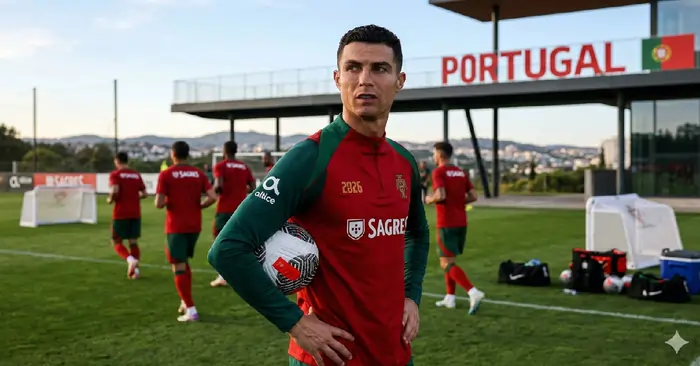
Early years and rise to superstardom
Cristiano Ronaldo dos Santos Aveiro was born on 5 February 1985 in Funchal, Madeira, and moved to Lisbon as a teenager to join Sporting CP’s academy before Manchester United signed him in 2003. His combination of acceleration, stepovers, and aerial power quickly turned him from a raw winger into one of the Premier League’s most decisive match‑winners under Sir Alex Ferguson.
The 2007–08 season was his first truly historic year, with a goalscoring output from wide areas that forced a re‑think of what a forward could be in an elite system. A world‑record move to Real Madrid in 2009 then launched the era in which Ronaldo became a volume scorer on a scale European football had rarely seen.
Goal records and major honours
Ronaldo’s statistical resume is now so dense that individual milestones almost blur together, but a few markers define his case in the “greatest ever” debate. He is the all‑time leading goalscorer in the UEFA Champions League, holding records for most goals and most assists in the competition’s history, and he has matched that influence at international level with Portugal.
For the national team, he has scored more than 140 goals and become the most capped male footballer of all time, surpassing the 200‑cap mark while still adding to his tally in European qualifiers. In UEFA’s European Championship, he holds records for both goals and assists, underlining how consistently he has delivered across multiple tournament cycles rather than in a single peak summer.
World Cup story: from 2006 to the 48‑team era
Ronaldo’s World Cup narrative spans two full decades, from his first tournament in 2006 to his push to be part of Portugal’s squad in 2026. In Qatar 2022, he became the first men’s player to score in five different World Cups when he converted a penalty against Ghana in the group stage, an achievement that symbolised his longevity at the very top level.
That same tournament also showed the tactical and generational transition Portugal were navigating, as he lost his guaranteed starting spot in the knockouts for the first time in a major international competition since Euro 2008. Even so, his presence off the bench and in the dressing room remained a key storyline, and it set the stage for the next phase of his international career under Roberto Martínez.
Portugal 2026: role, selection and expectations
As the 2026 World Cup approaches, Ronaldo’s place in the Portugal setup remains a live, high‑profile topic every international window. Head coach Roberto Martínez has publicly acknowledged both the scrutiny around Ronaldo’s selection and the need to balance his star power with maintaining a “high‑performance environment” where the team comes before any individual.
Martínez has described Ronaldo as an evolved, more positional striker—less of a touchline winger, more of a penalty‑box finisher whose value lies in occupying centre‑backs and attacking final‑third spaces. With Portugal confirming pre‑World Cup friendlies and qualification wrapped up, the expectation is that, fitness permitting, Ronaldo will enter the 2026 tournament as an experienced focal point rather than a guaranteed 90‑minute starter every match.
Late‑career reinvention in Saudi Arabia
At club level, Ronaldo’s move to Saudi Arabia marked the start of a new competitive chapter that many assumed would be purely commercial—but the production on the pitch has remained impressive. In the 2025–26 Saudi Pro League season, he has delivered over 20 league goals, maintaining a goals‑per‑minute rate that still compares favourably with other centre‑forwards in the division.
Match‑by‑match data shows that he continues to influence games decisively, with recent fixtures featuring multi‑goal performances and strong performance ratings that reflect both finishing and chance creation. This sustained output, combined with his durability in minutes played, is a core argument for keeping him involved with Portugal’s 2026 plans despite his age.
Leadership, mentality and global impact
Beyond the numbers, Ronaldo’s defining traits have always been ambition, competitive drive, and a visible obsession with physical preparation. That mentality has shaped not just his own career but also the expectations around professionalism for a generation of forwards who grew up watching him and Lionel Messi re‑set performance standards.
At international level, his captaincy has coincided with Portugal’s rise from dangerous outsider to consistent tournament contender, including their European Championship success and multiple deep runs in major competitions. Even in the late stages of his career, his presence drives global interest: broadcast partners, sponsors, and digital platforms still see Ronaldo as one of the key magnets for casual World Cup viewers in 2026.
Legacy in the Messi era
Any Ronaldo profile in a World Cup context inevitably intersects with Lionel Messi, whose triumph with Argentina in 2022 reshaped parts of the legacy debate. Messi’s World Cup win in Qatar gave his story a perfect international climax, but Ronaldo’s case leans more on cumulative records across leagues, competitions, and international cycles rather than a single crowning tournament night.
In practice, the football world has largely settled into viewing them as twin pillars of an era rather than needing a single definitive “winner.” For the 2026 World Cup audience, Ronaldo represents continuity with the last 20 years of the sport, while the expanded format introduces new stars who will try to build their own stories alongside him if he takes the field in North America one last time.
What Cristiano Ronaldo means for 2026 fans
For global fans tuning into 2026, Ronaldo will symbolise both nostalgia and ongoing relevance. Casual viewers know him first as a Champions League icon and a Ballon d’Or winner; more tactical‑minded fans will watch how he adapts his movement and pressing load as a veteran striker in a high‑intensity tournament.
In an expanded 48‑team World Cup, his matches will remain appointment viewing, influencing kick‑off scheduling, second‑screen behaviour, and live‑blog traffic in ways only a handful of players in history have managed. Whether he lifts another major international trophy or not, Cristiano Ronaldo’s 2026 chapter will help close one of football’s most statistically dominant and culturally visible careers on the sport’s biggest stage.