
Psychological Pressure Behind Knockout Stage Football Key Takeaways
The most potent element of psychological pressure behind knockout stage football is the fear of failure.
- Psychological pressure behind knockout stage football stems from life-or-death stakes, intense media scrutiny, and fear of failure.
- Top players use routines, visualization, and emotional regulation to manage anxiety in high-stakes moments.
- The shift from league football to knockout formats dramatically alters mindset, tactics, and team dynamics.
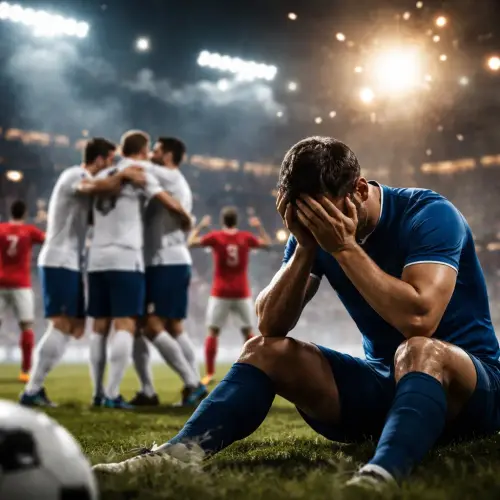
Understanding the Psychological Pressure Behind Knockout Stage Football
There is a reason why the knockout phase of any major tournament feels different. The rhythm of a league season — where a loss can be redeemed next week — vanishes. In a knockout match, every pass, every tackle, every whistle carries the weight of finality. The psychological pressure behind knockout stage football is not just about playing well; it is about managing the fear that one mistake could end your team’s tournament hopes. For a related guide, see 7 Reasons Why Match Momentum Changes Faster in Tournament Football.
This mental shift affects players at every level. Research from sport psychologists shows that cortisol levels spike significantly higher before knockout matches compared to regular league games. The brain perceives these fixtures as threats, not just challenges. For young players or those without deep tournament experience, this can trigger a cascade of negative thoughts that hinder performance.
Why the Stakes Feel Personal
When a team is eliminated, players often internalize the result as a personal failure. Unlike a league campaign where performance is averaged over months, a knockout match offers no second chance. This finality amplifies the mental strain in sports, making each moment feel monumental. Players describe the sensation as playing with a tightrope beneath their feet — one wobble and the whole world watches you fall.
Three Key Insights Into the Mental Strain in Sports
Insight 1: The Fear of Failure Becomes a Self-Fulfilling Prophecy
The most potent element of psychological pressure behind knockout stage football is the fear of failure. When players obsess over what could go wrong, their decision-making slows. They hesitate on the ball, second-guess passing lanes, and freeze in front of goal. This phenomenon is known as “choking under pressure” — the exact opposite of what is needed in high-stakes moments.
Consider the 2022 World Cup final between Argentina and France. Kylian Mbappé scored a hat-trick, but it was his mental resilience in the shootout that defined his performance. Meanwhile, other world-class players have missed decisive penalties because their minds raced ahead to the consequences of missing. The fear of failure doesn’t just affect amateurs; it haunts the best.
Insight 2: The Body Betrays the Mind Under Stress
Stress manifests physically before it affects technique. Players under psychological pressure behind knockout stage football often report heavy legs, blurred vision, or a sensation of moving in slow motion. These are not excuses — they are biological responses. The sympathetic nervous system floods the body with adrenaline, which, in excess, disrupts fine motor control.
This explains why penalty shootouts are so unpredictable. A player who scores calmly in training may sky the ball over the bar in a shootout. The difference is not skill — it is how well the player regulates their nervous system. Breathing exercises, pre-performance routines, and grounding techniques are tools used by sport psychologists to counter this physical hijack.
Insight 3: Team Culture Either Buffers or Amplifies the Pressure
The locker room atmosphere before a knockout match can determine the outcome. Teams with a strong psychological culture — where players support each other and the coach emphasizes process over outcome — tend to handle pressure better. In contrast, when the environment is toxic or overly critical, the mental strain in sports multiplies.
Look at how the England national team transformed after hiring a dedicated team psychologist. The old narrative of players being “too afraid” to take penalties shifted after their Euro 2020 campaign, where they embraced the shootout with visible calm. This cultural change did not erase pressure — it taught players how to live with it.
How Top Players Cope With Psychological Pressure Behind Knockout Stage Football
Coping with psychological pressure behind knockout stage football is not about eliminating stress — it is about managing it. Elite athletes develop personalized strategies that allow them to stay present when the world feels like it is collapsing around them. Here are the most effective techniques used by top players.
Pre-Match Routines as Anchors
Lionel Messi has a specific ritual before every match: he ties his laces in a particular order, takes a slow walk around the pitch, and visualizes key moments. These routines are not superstition — they are psychological anchors that signal safety to the brain. By repeating familiar actions, players tell their amygdala “you have been here before. You are safe.” This reduces the acute stress response and allows the cortex to stay in control.
Visualization and Mental Rehearsal
Visualization is one of the most researched tools for managing psychological pressure behind knockout stage football. Players mentally rehearse not just successful outcomes, but also difficult scenarios — like a missed pass or a bad call from the referee. This practice reduces the shock of adversity when it actually happens. If a player has already imagined the moment their penalty hits the post and how they will react, they respond with composure instead of panic.
Emotional Regulation Techniques
Emotional regulation means recognizing feelings of anxiety and reframing them as excitement. Sport psychologist Dr. Michael Gervais explains that the physical sensations of fear and excitement are nearly identical. The difference is in how we interpret them. Players who say “I am nervous” tend to perform worse than those who say “I am ready.” This simple cognitive shift can unlock better performance under the most intense scrutiny.
Real-World Examples of Coping and Collapse
The history of football is filled with stories that illustrate the psychological pressure behind knockout stage football. Some players used it as fuel; others were consumed by it. Understanding these examples helps fans and athletes alike recognize the invisible battle happening on the pitch.
Example 1: Zinedine Zidane’s 2006 World Cup Final
In what was supposed to be the crowning moment of his career, Zidane headbutted Marco Materazzi in the 2006 World Cup final. The pressure had been building for weeks. Media scrutiny, the weight of an entire nation, and the knowledge that this was his last match created a perfect storm of psychological strain. Zidane snapped because even the most composed players have a breaking point. This moment remains one of the clearest illustrations of how mental strain in sports can override even a genius mind.
Example 2: The German Penalty Mastery
Germany’s success in penalty shootouts is not accidental. For decades, the German national team has practiced penalties under simulated pressure. Players take penalties while teammates scream at them, while crowd noise blares through speakers, and after physically exhausting drills. This systematic desensitization rewires their response to psychological pressure behind knockout stage football. When the real moment arrives, their brains are primed to treat it as just another practice rep. For a related guide, see 7 Ways Stadium Atmosphere Boosts Player Performance.
Useful Resources
For a deeper dive into the psychology of high-stakes sports performance, the following resources offer evidence-based insights and expert analysis.
- Psychology Today: Sports Psychology Basics — Explore the fundamentals of how mental training improves athletic performance under pressure.
- The Sport Journal: Psychological Pressure in Elite Sport — A peer-reviewed article examining research on stress, anxiety, and coping mechanisms in professional athletes.
In the end, the psychological pressure behind knockout stage football is what separates the good from the great. It is not enough to have technical skill or tactical understanding — a player must also master their own mind. The matches that legends are made of are not won on talent alone. They are won in the quiet moments before kickoff, when a player decides that fear will not be the one calling the shots. For a related guide, see 5 Surprising Reasons Underdog Nations Keep Shocking Football Experts.
Frequently Asked Questions About Psychological Pressure Behind Knockout Stage Football
What is psychological pressure behind knockout stage football ?
It is the intense mental stress players experience when a single loss eliminates their team from a tournament. Unlike league play, there are no second chances, which amplifies anxiety and the fear of failure.
Why is knockout stage football more stressful than league matches?
In league matches, a poor performance can be compensated for in future games. Knockout matches have finality — one mistake ends the tournament. This creates a high-stakes environment that triggers stronger stress responses.
How do players manage the mental strain in sports ?
Players use pre-match routines, visualization, breathing techniques, and emotional regulation strategies. Many work with sport psychologists to build a personalized tool kit for handling pressure.
What happens to the body under high psychological pressure ?
The sympathetic nervous system releases cortisol and adrenaline. While this can heighten alertness, excessive amounts disrupt fine motor control, slow decision-making, and cause physical tension.
Can psychological pressure be beneficial?
Yes, pressure can sharpen focus and elevate performance if managed correctly. The key is interpreting stress as excitement rather than fear, which allows players to access a flow state.
Why do some players thrive under knockout pressure while others fail?
Individual differences in personality, past experience, mental training, and support systems play a role. Players who have practiced under simulated pressure are more likely to succeed when stakes are real.
What role does the coach play in managing pressure?
Coaches set the emotional tone of the team. Those who emphasize process over outcome and create a psychologically safe environment help players stay calm. Coaches who criticize heavily often increase performance anxiety.
How do penalty shootouts test psychological pressure ?
Penalty shootouts are a pure test of nerve. With no teammates to pass to and the entire stadium watching, the player must rely entirely on their ability to regulate their own mental state under maximum scrutiny.
What is the ‘choking’ phenomenon in football?
Choking occurs when a player underperforms due to excessive pressure. Their conscious mind overrides automatic skills, causing hesitations, technical errors, and poor tactical decisions they would not make under normal conditions.
Does home advantage reduce psychological pressure ?
Home advantage can reduce pressure for some players due to familiar surroundings and crowd support. However, it can also increase pressure when players feel a stronger obligation not to disappoint their home fans.
Are younger players more susceptible to pressure?
Younger players generally have less experience managing high-stakes emotions, making them more vulnerable. However, they can also be more resilient if they have strong mentorship or are naturally confident.
What specific techniques do sport psychologists use?
Techniques include cognitive restructuring, attentional control training, biofeedback, progressive muscle relaxation, and acceptance-based approaches like ACT (Acceptance and Commitment Therapy).
How long does the mental strain last after a knockout loss?
Recovery varies. Some players process the loss within days, while others carry emotional residue for weeks or months. Professional athletes often work with psychologists to prevent lingering effects from impacting their next season.
Does the media increase psychological pressure on players?
Yes, intense media scrutiny before and after knockout matches amplifies pressure. Players are bombarded with questions about their form, the opponent’s strengths, and the cost of failure, which can disrupt focus.
How do teams practice handling knockout pressure?
Teams simulate high-pressure scenarios in training by creating consequences for failure (like extra running), introducing loud crowd noise, and forcing players to shoot penalties after intense physical exertion.
What is the ‘yips’ in football?
The yips is a psychomotor condition where a player suddenly loses the ability to execute a basic skill, often under pressure. It is linked to anxiety and can affect kicking, passing, or even simple movements.
Can psychological pressure cause long-term mental health issues?
Persistent high pressure without adequate support can contribute to anxiety disorders, depression, or burnout. This is why mental health resources are becoming more common in professional football clubs.
How do fans’ expectations affect player performance?
High expectations can motivate players but also create paralyzing pressure. When a nation expects victory, players may feel they carry the weight of millions, which can inhibit natural performance.
What psychological traits define a ‘clutch’ player?
Clutch players typically exhibit high emotional stability, strong self-confidence, the ability to compartmentalize failure, and excellent focus under distraction. These traits can be developed with proper training.
Is psychological pressure worse in international tournaments than domestic?
International tournaments often carry more pressure because they occur less frequently, involve national pride, and feature longer breaks between matches, which gives players more time to overthink.