
National Team: The Path to FIFA World Cup 2026 Glory
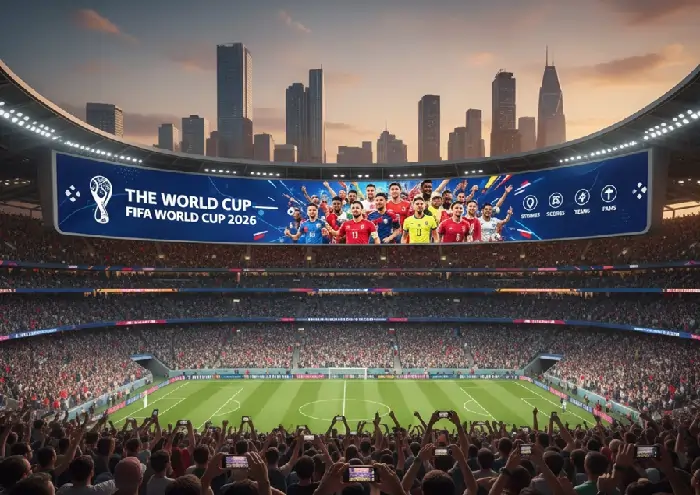
National team are the heartbeat of every FIFA World Cup story. This is your command center for tracking all 48 nations on the road to the 2026 tournament in the United States, Canada, and Mexico. From FIFA World Cup 2026 qualifiers to tactical evolutions and squad transitions, we break down the data, the systems, and the defining moments shaping the journey to North America.
Asia: A Tactical Power Shift (AFC World Cup 2026 Qualifiers)
With 8.5 qualification slots available, Asia is experiencing its most competitive cycle in history.
Japan (FIFA Rank #15 as of the latest FIFA update) became the first AFC nation to secure qualification, finishing the final round with a +22 goal difference — the highest recorded in this qualification phase. Their structured 4-3-3 build-up, anchored by inverted fullbacks and high-possession midfield control, has set the tactical benchmark.
South Korea and Iran followed with disciplined defensive structures and transition-heavy attacks, while Uzbekistan and Jordan secured their first-ever FIFA World Cup appearances — proof that the competitive gap across Asia is narrowing rapidly.
Across the region, pressing intensity and transitional speed have increased significantly compared to the 2022 cycle. Asia is no longer reactive. It is proactive.
Europe: The Elite Sixteen (UEFA World Cup 2026 Qualification)
With 16 direct slots, UEFA remains the most tactically layered qualification path in world football.
France and Spain enter the cycle as statistical co-favorites based on squad market value, depth, and expected goals (xG) differential over the past two years. Both sides are operating fluid 4-3-3 systems that shift into 3-2-5 attacking shapes during possession.
Norway’s return after a 28-year absence is powered by one of Europe’s most efficient forward duos, converting chances at a rate above the UEFA qualifying average. Meanwhile, England, the Netherlands, and Austria headline what analysts have dubbed an early “Group of Death,” where pressing metrics and defensive transitions may determine survival.
Portugal’s key storyline centers on generational transition. Whether 2026 marks a symbolic farewell or a tactical reinvention, the team’s identity is evolving toward faster vertical build-up play and reduced reliance on a single focal point.
Africa: From Contenders to Standard-Setters (CAF Qualifiers)
Morocco’s 2022 semifinal run permanently shifted global perception of African football.
With 9 direct slots for the first time in history, CAF’s representation at the 2026 World Cup will be its largest ever. Morocco (FIFA Rank #12), Senegal, and reigning AFCON champions Ivory Coast lead a continent that blends athleticism with structured tactical organization.
Cape Verde and South Africa represent the new wave — high-pressing systems, compact defensive blocks, and disciplined counter-attacks have disrupted traditional hierarchies during the World Cup 2026 qualifiers.
Data trend: African teams have improved average defensive compactness metrics and transition efficiency compared to the previous qualification cycle. The probability of a first-ever African finalist has never been higher.
South America: The Most Ruthless Table in Football (CONMEBOL Qualifiers)
Ten teams. One table. No margin for error.
Argentina, currently ranked #1 in the FIFA World Rankings, remain the tactical benchmark. Their hybrid system allows for flexible shape-shifting between structured possession and rapid counter-attacks, supported by one of the most balanced midfields in international football.
Brazil, undergoing stylistic recalibration, are shifting toward a more vertically aggressive structure designed to reduce transitional vulnerabilities that plagued recent tournaments.
Colombia’s unbeaten run across recent qualifiers highlights a data-driven resurgence — elite defensive recovery speed paired with altitude-conditioned endurance makes them one of the most tactically dangerous dark horses in South America.
In CONMEBOL, every match simulates knockout intensity. That is why qualification here remains the ultimate stress test before the FIFA World Cup 2026.
North & Central America: The Co-Host Equation (CONCACAF Qualifying)
Canada, Mexico, and the United States automatically qualify as co-hosts of the 2026 World Cup, shifting their focus toward high-caliber friendlies against top European and South American competition.
Preparation strategy matters. Climate adaptation, travel logistics, and altitude training are central variables in this expanded 48-team format.
With the three co-hosts exempt, nations like Panama, Haiti, and Curaçao are competing for remaining slots in a qualification structure that emphasizes North Central America regional depth. Panama’s recent defensive consistency and tournament experience position them as early contenders, but volatility remains high across the region.
Oceania: A Direct Path, A Global Challenge (OFC)
For the first time, Oceania holds one guaranteed direct qualification slot.
New Zealand lead the region statistically and structurally, combining physical presence with disciplined defensive spacing. However, regional dominance is only phase one.
Over the past 18 months, the All Whites have deliberately scheduled fixtures in Europe and Asia to simulate the pace, physicality, and tactical diversity they will face at the FIFA World Cup 2026.
The question is no longer qualification. It is competitive relevance on the global stage.
Our Coverage Philosophy: Where Data Meets Drama
At The World Cup News, we go beyond headlines.
We track expected goals (xG) trends across every confederation.
We analyze squad age curves and depth sustainability.
We evaluate pressing intensity, recovery speed, and build-up efficiency.
We model travel distance, time-zone shifts, and climate impact across host cities in North America.
The FIFA World Cup 2026 will be the largest tournament in history.
The difference between contenders and champions will not be reputation.
It will be structure, data, depth, and adaptability.
And we will track every variable.