
Algeria
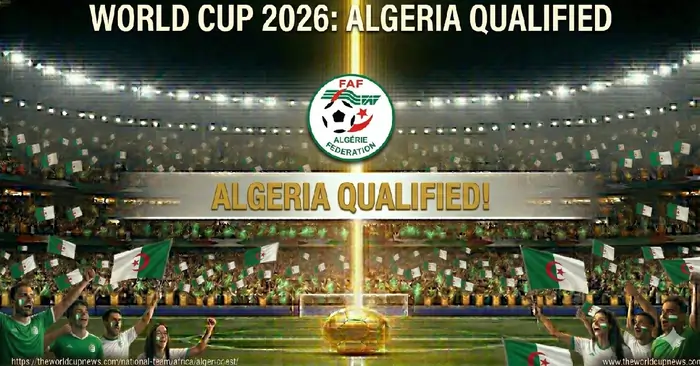
Algeria enter the 2026 World Cup cycle as a proud heavyweight in CAF football trying to re‑establish themselves after a turbulent few years. The Desert Foxes still have the talent base, diaspora depth, and tactical flexibility to trouble any opponent, but the narrative around this generation has shifted from dominance to redemption: can Algeria turn undeniable quality into consistency again and get back to the global stage?
Recent context and motivation
Over the last decade, Algeria have oscillated between spectacular highs and painful lows. They hit their peak by winning AFCON 2019 and producing a superb 35‑match unbeaten run in all competitions, then suffered shock setbacks in both AFCON and World Cup qualifying that stopped their momentum cold. Those swings left the fanbase with a sense that the squad had underachieved relative to its ability, especially given how many Algerian internationals regularly star in Europe’s top leagues.
That backdrop shapes the 2026 cycle. Every qualifier and major tournament is framed as a chance to prove that Algeria belong among Africa’s most reliable powers, not just its most talented. The coaching staff’s job is to blend the remaining core of the title‑winning generation with a new wave of players emerging from Ligue 1, the Bundesliga, the Premier League, and beyond.
Squad core and key players
Algeria’s greatest strength remains the depth and distribution of its player pool. Thanks to a large diaspora in France and across Europe, they can draw from a broad set of dual‑eligible talents, many of whom are schooled in high‑level tactical environments.
Typical anchors in an Algeria 2026‑cycle squad include:
- Goalkeeper: A modern sweeper‑keeper profile with good shot‑stopping and strong distribution, comfortable starting play from the back and sweeping up passes behind a high line.
- Centre‑backs: Usually two ball‑playing central defenders with enough pace to defend space, strong in duels and aerials, and comfortable breaking lines with vertical passes into midfield or the half‑spaces.
- Full‑backs: Algeria often rely on at least one very attack‑minded full‑back who can overlap and provide width, plus another who can tuck inside to form a back three in possession and help build up.
In midfield, Algeria tend to build around:
- A deep‑lying controller who drops between centre‑backs, dictates tempo, and sprays diagonal switches.
- A box‑to‑box runner who can press, win second balls, and carry the ball forward.
- A more creative, between‑the‑lines midfielder or hybrid No. 10 who can receive under pressure, turn, and feed the wingers or striker.
Further forward, the Desert Foxes remain known for technical excellence:
- Wide playmakers and wingers are central to their identity. Traditionally, the left‑footed right‑winger profile—cutting inside to combine or shoot from distance—has been a hallmark of their attacking patterns.
- Centre‑forward: Usually a mobile striker who can link play, attack crosses, and run channels, rather than a static target man. Algeria look best when their No. 9 is willing to drift, drag centre‑backs out of position, and open half‑spaces for late runners.
Because I can’t pull current live data here, you’ll want to plug in the exact 2025–26 names and clubs (for example, your current core from Europe’s top 5 leagues and the best domestic‑based players) into these roles when you publish.
Playing style and tactical identity
When Algeria are at their best, they play some of the most attractive football in Africa. Their style typically combines:
- High technical level: Crisp short passing, comfort playing in tight spaces, and one‑touch combinations around the box.
- Wide overloads: They like to create 2v1s or 3v2s on the flanks, using overlapping full‑backs and underlapping midfielders around their wingers.
- Diagonal switches: The deep midfielder or centre‑back frequently hits long diagonals to isolate a winger versus a full‑back, especially when opponents shift too aggressively to one side.
- Fast transitions: When they recover the ball, Algeria can break quickly through their wingers and attacking midfielders, particularly if the striker pulls wide and drags a defender out of position.
Without the ball, the Desert Foxes tend to use:
- A mid‑block as their default: the back four holds a line a bit higher than their own box, with the midfield line screening passes into the No. 10 zone.
- Targeted pressing:
- Pressing triggers when an opposition centre‑back receives facing his own goal.
- Aggressive jumps when the ball goes to a less comfortable full‑back.
- Compactness between lines: Algeria look strongest when the distance between their defensive and midfield lines is small, making it difficult for opponents to receive freely between the lines.
Their weakness, historically, has been occasional lapses in defensive concentration and game management: switching off on crosses, or letting the tempo swing wildly when they should be slowing things down. A key question for 2026 is whether this group can add more control and “tournament maturity” to their obvious talent.
Road to tournaments and psychological angle
In a 48‑team World Cup era, Algeria’s margin for error in qualifying is a bit larger, but the psychological pressure remains high. Expectations from supporters are straightforward: in any given CAF cycle, Algeria are supposed to:
- Qualify for AFCON as a matter of routine and target at least the quarter‑finals.
- Be in the World Cup conversation through to the final rounds of qualifying and, ideally, secure a direct spot rather than relying on playoffs.
- Compete as peers with Senegal, Morocco, Ivory Coast, Egypt and others at neutral‑venue tournaments.
The 2026 cycle narrative is therefore about reclaiming status. After near‑misses and early exits, the team needs a clean, professional qualifying run and a deep AFCON to restore fear factor. Every qualifier and high‑profile friendly becomes part of that story: is Algeria “back,” or still searching for their best version?
Algeria’s outlook in the 2026 World Cup era
Looking ahead, there are three key reasons why Algeria remain one of the most interesting African teams in the 2026 cycle:
- Depth of talent: The diaspora pipeline ensures a constant flow of new players; you rarely see an Algerian squad without several exciting newcomers from Ligue 1, the Premier League, or the Bundesliga.
- Ceiling of performances: When the structure works and key players click, Algeria’s peak level—ball circulation, pressing, and chance creation—can match almost any non‑elite European or South American side.
- Motivation and redemption: The sting of missing out on previous targets, combined with the pride of a football‑obsessed country, usually produces a sharp edge in big games.
If Algeria can stabilize defensively, manage game states better, and keep their creative core fit, they have the tools to qualify for 2026 and be one of the most watchable sides from CAF—capable of both an upset against a seeded team and a serious run into the knockouts.
