
Iran
Iran head to the FIFA World Cup 2026 as one of Asia’s most battle-tested teams, qualifying for a seventh finals and aiming—once again—to finally break through the group-stage barrier. With a spine built around experienced Europe-based stars and a physically imposing, tactically disciplined style, Team Melli will be a difficult assignment for any opponent in North America.
How Iran Qualified for World Cup 2026
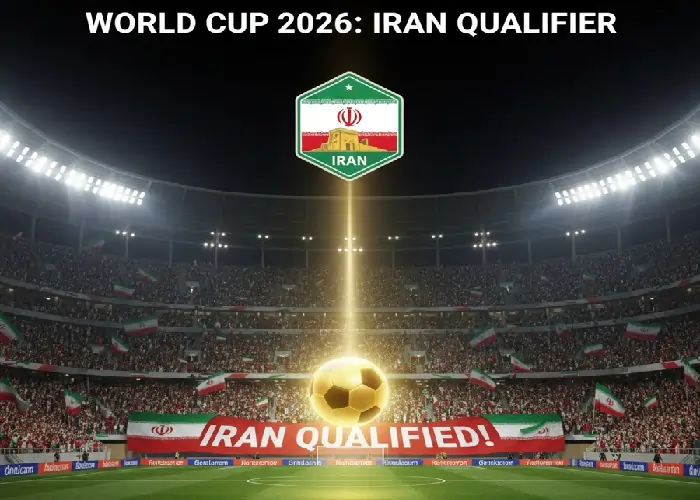
Iran came through the revamped AFC qualifying format with authority, confirming their place at the 2026 finals with time to spare. They first navigated the second round comfortably, topping their group and advancing to the decisive third round, where the continent’s heavyweights fought for six automatic berths.
In that AFC third round, Iran were drawn into Group A alongside Uzbekistan, United Arab Emirates, Qatar, Kyrgyzstan and North Korea, a section that quickly emerged as one of the most competitive in the zone. Across 10 matches, Team Melli recorded seven wins, two draws and one defeat, scoring 19 goals and conceding only eight, to finish top of the group with 23 points and secure direct qualification.
The decisive night came in Tehran, when Iran drew 2–2 with Uzbekistan at the Azadi Stadium, a result that mathematically sealed their ticket to Canada, Mexico and the USA. Mehdi Taremi scored twice, first equalising with a superb volley from the edge of the box and then levelling again in the 83rd minute after Uzbekistan had restored their lead, ensuring Iran would reach a fourth consecutive World Cup. That result also denied Uzbekistan the chance to clinch a historic first qualification, underlining Iran’s ruthlessness in high-pressure situations.
World Cup History and Tournament Pedigree
Iran’s relationship with the World Cup is defined by regular qualifications, famous one-off victories, and an ongoing quest to reach the knockout rounds for the first time. Team Melli have now qualified for seven editions—1978, 1998, 2006, 2014, 2018, 2022 and 2026—making them one of Asia’s most frequent participants.
Their early appearances were mainly about gaining experience, but Iran’s breakthrough moment on the global stage came at France 1998, when they defeated the United States 2–1 in an emotionally charged group-stage match that became one of the most iconic fixtures in World Cup history. More recently, at Russia 2018 they beat Morocco and drew with Portugal to finish on four points, their best tally in any World Cup group, narrowly missing out on the last 16 in a tight group that also included Spain.
At Qatar 2022, Iran again showed they can rise on the big stage, defeating Wales 2–0 with two stoppage-time goals in a dramatic group match. However, despite isolated successes, they have yet to progress beyond the group in any of their World Cup appearances. That reality gives their 2026 campaign a clear target: turn regular qualification into genuine knockout-stage presence.
In terms of overall record, Iran’s six previous World Cups produced three wins, four draws and 10 defeats, with notable victories over the USA (1998), Morocco (2018) and Wales (2022). The hope among Iranian fans and analysts is that the experience accumulated across these cycles, combined with a maturing core of top-level professionals, will finally push Team Melli over the line into the round of 16 in North America.
Playing Style, Tactics and Identity
Iran’s modern identity is built on defensive solidity, physical duels, and efficient use of their attacking stars, making them one of the more pragmatic yet dangerous sides from Asia. Typically lining up in a 4-2-3-1 or 4-3-3, they prioritise compactness between the lines, strong organisation in central areas, and disciplined off-the-ball work to deny opponents easy chances.
Their back line often sits in a mid-block, allowing the opposition some controlled possession while funnelling play into areas where Iran can press aggressively and win second balls. Physical and experienced centre-backs, supported by full-backs who balance forward runs with defensive responsibility, give them stability against both aerial and through-ball threats.
In transition, Iran are at their most dangerous. With forwards like Mehdi Taremi and Sardar Azmoun, they can go direct and exploit space behind high defensive lines, or use quick combinations around the box to create shooting opportunities. Taremi, in particular, excels at link-up play and drawing fouls in advanced zones, which helps Iran win set pieces—another key weapon in their attacking arsenal.
During qualifying, Taremi scored 10 goals, ranking among the top scorers in the Asian zone and underscoring how central he is to Iran’s attacking output. Azmoun, meanwhile, has been highlighted as a primary playmaker, contributing both goals and assists through clever movement and chance creation from the half-spaces. This combination of physical presence, technique, and set-piece threat makes Iran capable of punishing even small lapses in concentration from their opponents.
Key Players and 2026 Core
Iran’s 2026 squad is anchored by a blend of seasoned internationals and emerging talents who have started to make their mark in both domestic and European competitions. Up front, Mehdi Taremi remains the focal point of the attack, carrying his prolific form from Portugal and Italy—where he has scored heavily for Porto and spent time at Inter Milan—into the national team. He is not only Iran’s primary goal threat but also a leader in high-stakes fixtures, as shown by his brace that clinched qualification against Uzbekistan.
Sardar Azmoun provides a complementary attacking profile, operating as a second striker or advanced playmaker, using his experience from top European leagues (including stints at Roma and Bayer Leverkusen) to knit attacks together. Together, Taremi and Azmoun form one of the most potent forward duos in Asian football, combining aerial ability, finishing, and creativity.
Behind them, the midfield and defence feature a mix of established names and fresh faces. Goalkeeper Alireza Beiranvand continues to be a crucial figure, known for his shot-stopping and penalty-saving heroics, and was again included among the key goalkeepers in preliminary squads for the 2026 qualifiers. In front of him, defenders such as Shoja Khalilzadeh, Milad Mohammadi and Morteza Pouraliganji offer experience, physical strength and familiarity with Iran’s defensive system.
Iran’s coaching staff have also integrated younger talents to reduce the squad’s average age. Players like Parsa Jafari and Yaqoub Barajeh received first senior call-ups during the 2026 qualifying campaign, signalling a strategic refresh and focus on succession planning, while promising attacking midfielder Mohammad Javad Hosseinnejad has been flagged as a potential future star after productive spells at club level. This infusion of youth, combined with the experienced core, gives Team Melli greater depth and flexibility heading into the tournament.
Expectations for World Cup 2026
Expectations around Iran at World Cup 2026 are clear and ambitious: reach the knockout stage for the first time in their history. Having now qualified for four consecutive tournaments and seven overall, simply participating is no longer seen as enough by fans or players.
Analysts point to Iran’s strong qualifying campaign, their proven ability to compete with strong sides in tight group matches, and the prime years of stars like Taremi and Azmoun as reasons to believe that the round of 16 is an attainable target. Betting and prediction models typically position Iran as outsiders rather than favourites, but their defensive organisation and set-piece threat make them a classic tournament dark horse—especially in an expanded 48-team format, where small details in group play will be decisive.
At the same time, Iran will need to overcome historical patterns: narrow defeats, late goals conceded, and missed opportunities in high-pressure games have often been the difference between early exit and progression. If they can maintain concentration across all three group matches, convert chances at a higher rate, and keep their key attackers fit, Team Melli have a realistic shot at finally stepping into the knockout rounds and delivering their best-ever World Cup performance on North American soil.
