
Japan
Japan enter the 2026 FIFA World Cup as Asia’s early qualifiers and one of the most tactically disciplined, fearless counter‑attacking teams in international football. The Samurai Blue combine high‑intensity pressing, technical midfielders, and a new generation of Europe‑based stars who believe they can finally push beyond the round of 16 on the world stage.
How Japan Qualified for World Cup 2026
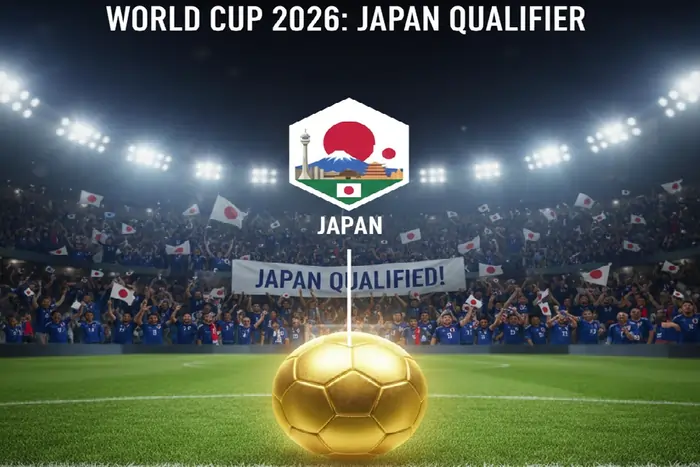
Japan made a statement in AFC qualifying by securing their ticket to Canada, Mexico and the USA with games to spare, underlining their status as Asia’s most consistent powerhouse. They dominated their early‑round group, finishing top with a perfect record, scoring heavily and not conceding in several matches, which reflected their defensive organisation and attacking depth.
In the decisive phase, Japan became the first non‑host nation in the world to mathematically clinch qualification for 2026, achieving it on 20 March 2025 while three qualifying matchdays were still remaining. That early qualification allowed coach Hajime Moriyasu and his staff to experiment with tactical shapes, look at younger players, and focus friendlies on testing themselves against stronger European and South American opposition rather than fighting for points in every window.
This smooth route to the finals continues a pattern: Japan have now appeared at every World Cup since 1998, making them one of the most reliable qualifiers outside Europe and South America. The difference this time is the confidence inside the camp that they are not just participants but genuine dark horses for a deep run, after recently beating giants like Germany and Spain at Qatar 2022 and topping a World Cup group for the first time on foreign soil.
World Cup History and Tournament Pedigree
Japan’s World Cup story is one of rapid growth, painful near‑misses, and a steady shift from underdog to respected contender. They first qualified in 1998, losing all three games, but quickly improved, co‑hosting the 2002 tournament and reaching the round of 16 for the first time with memorable wins over Russia and Tunisia.
Since then, Japan have reached the knockout stage four times (2002, 2010, 2018, 2022), but each time have fallen in the round of 16, often in agonising fashion. In 2010 they pushed Paraguay to penalties after a 0–0 draw, only to lose in the shoot‑out, while in 2018 they led Belgium 2–0 in the last 16 before conceding three times, including a stoppage‑time winner that broke neutral hearts worldwide.
At Qatar 2022, Japan produced two of the most famous upsets in recent memory, coming from behind to beat both Germany and Spain in the group stage, and advanced as group winners despite having the lowest share of possession ever recorded for a winning team at a World Cup match since 1966 in the dramatic 2–1 victory over Spain. They again went out on penalties in the round of 16, this time against Croatia, but the campaign cemented their image as the team that can outrun, outpress, and outfight traditional giants on the biggest stage.
Overall, Japan’s World Cup record now includes seven tournament appearances, seven wins from 25 matches, and repeated progression from the group stage, with their best finishes coming in those four round‑of‑16 appearances. That foundation of experience, plus a bigger player pool in Europe, gives them a stronger platform than ever to finally break their last‑16 ceiling at World Cup 2026.
Playing Style, Tactics and Identity
Modern Japan are built on intense collective work, intelligent pressing, and lightning‑quick transitions rather than relying on one superstar, making them one of the most balanced squads heading to North America. Under Moriyasu, they are comfortable switching between a back three and a back four, but the core principles remain the same: compact defensive shape, aggressive pressing triggers on the flanks, and rapid forward combinations once they win the ball.
In possession, Japan’s full‑backs and wing‑backs push high to create width while technically gifted midfielders link play between the lines, enabling them to overload half‑spaces and create cutback situations rather than relying on hopeful crosses. The team’s movement is highly choreographed: forwards such as Kaoru Mitoma and Takefusa Kubo drift inside to receive between lines, while overlapping runs drag markers away and open lanes for late midfield arrivals into the box.
Out of possession, they are relentless, often pressing in organised waves that are designed to force opponents wide and into predictable long balls, where their centre‑backs can step up to intercept or win aerial duels. Japan’s World Cup 2022 wins over Germany and Spain showcased this blueprint perfectly, as they surrendered possession, stayed compact, and then exploded in short, decisive bursts to punish mistakes and transitions.
Set pieces have become an increasingly important weapon, with well‑rehearsed routines and delivery from technically sharp wide players giving them another route to goals when opponents sit deep. Combined with their typically excellent fitness levels and work rate, that makes Japan a side that can stay dangerous from the first minute to stoppage time in every match in 2026.
Key Players and 2026 Core
Japan’s 2026 squad blends an experienced spine with a wave of emerging talent from Europe’s top leagues, giving them depth in almost every position. In goal, Zion Suzuki has been widely tipped to claim the No. 1 shirt after impressing in Serie A, offering shot‑stopping ability, improved aerial command, and the confidence to play out from the back in high‑pressure games.
At the back, defenders such as Ko Itakura and other centre‑backs from the Bundesliga and J‑League provide height, composure, and comfort in both three‑ and four‑man defensive lines. Emerging options like Hiroki Sekine and Junnosuke Suzuki have been highlighted as rising stars, with Sekine’s move to Ligue 1 (Reims) seen as an important step in his development and a sign of Japan’s growing export pipeline to Europe.
Midfield remains Japan’s heartbeat, with experienced leaders such as Wataru Endo anchoring the centre and doing the dirty work in front of the defence while more creative profiles like Daichi Kamada and others orchestrate attacks between the lines. Younger options, including Yuito Suzuki and dynamic box‑to‑box runners, add energy and ball‑carrying threat, giving Moriyasu multiple combinations depending on the opponent and game state.
In attack, Japan may have their most exciting generation ever, headlined by wingers Kaoru Mitoma and Takefusa Kubo plus flexible forwards like Ritsu Doan, who all bring dribbling, creativity, and end product in the final third. Mitoma’s ability to beat defenders one‑on‑one, Kubo’s playmaking between the lines, and Doan’s knack for big‑moment goals give the Samurai Blue a multi‑headed threat that opponents will struggle to contain for 90 minutes.
That attacking firepower is supported by a broader squad packed with players accustomed to European football’s intensity, tactical demands, and travel schedule, an underrated advantage for a tournament that will unfold across three massive host nations in 2026. With so many options, Japan have the flexibility to adapt line‑ups and roles without losing their core identity, something that could be decisive in a World Cup with a larger field and more games.
Expectations for World Cup 2026
Expectations around Japan are higher than ever, both at home and abroad, with many analysts viewing them as one of the most dangerous non‑European sides outside the traditional South American powers. Their early qualification, strong performances in recent major tournaments, and growing pool of Europe‑based players all contribute to the feeling that this generation is ready to finally crack the quarter‑final barrier—and perhaps even dream of a semi‑final run if the draw opens up.
The expanded 48‑team format and increased number of Asian slots also mean Japan will enter the finals with less qualifying fatigue than in previous cycles, having been able to rotate and plan long‑term once their spot was secured. That preparation time, combined with their tactical cohesion and fitness, could give them an edge over nations who arrive after tense, last‑minute qualification battles or inter‑confederation play‑offs.
Still, the big question remains whether Japan can manage the emotional and tactical details in knockout games, where a single lapse or missed penalty has repeatedly cost them a place among the world’s top eight. If they can pair their trademark discipline and energy with clinical finishing and composure in the decisive moments, the Samurai Blue have every reason to believe they can deliver the greatest World Cup in their history on North American soil in 2026.
