
nations building momentum World Cup 2026 Key Takeaways
The race to the 2026 FIFA World Cup is already heating up, with several teams showing remarkable progress in tactics, player development, and competitive results.
- USA has invested heavily in a young, homegrown talent pool and will benefit from hosting duties, signaling a genuine upward trajectory.
- Canada has emerged from obscurity with a dynamic attack led by global stars, proving they belong among World Cup contenders 2026 .
- Japan continues to punch above its weight, blending European experience with a cohesive system that unsettled top teams at Qatar 2022.
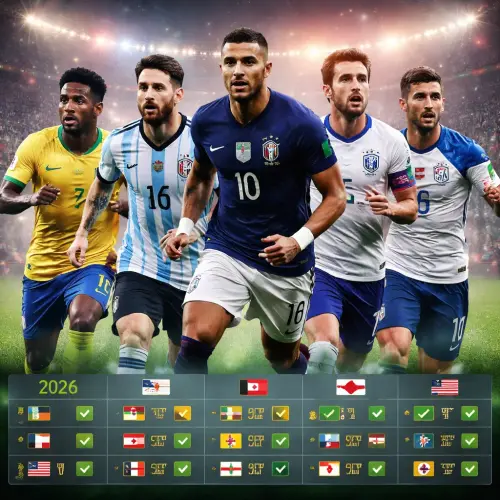
What Defines nations building momentum World Cup 2026?
Momentum in international football is a blend of generational talent influx, tactical evolution, consistent tournament performances, and, in some cases, the advantage of hosting. For the 2026 edition, which expands to 48 teams across the United States, Canada, and Mexico, the path to glory is wider but also more competitive. The rising soccer nations 2026 we examine share a common thread: they are ascending at a pace that could see them surpass historically stronger rivals on the grandest stage. For a related guide, see 7 Reasons Why International Tournaments Feel More Competitive Than Ever.
The Top 5 nations building momentum World Cup 2026
After analyzing recent World Cup cycles, FIFA rankings trajectory, and youth development indicators, these five nations stand out for their upward arc.
1. United States: The Hosts’ Resurgence
Few World Cup contenders 2026 combine infrastructure, investment, and raw potential like the United States. The USMNT qualified for Qatar 2022 with its youngest-ever squad and has since seen stars like Christian Pulisic, Weston McKennie, and Gio Reyna gain top-level European experience. The 2026 World Cup on home soil could unleash a wave of confidence seldom seen from the program. With a solid base of MLS producing prospects and dual-national recruitment improving, the U.S. is no longer a side just happy to be there. They are genuinely aiming for the quarterfinals—and perhaps beyond.
2. Canada: From Underdog to Rising Power
Canada’s rise has been one of the most dramatic stories in global football. After qualifying for just their second World Cup in 2022—and their first since 1986—the Canucks stalled somewhat in Qatar but have not looked back. With Alphonso Davies among the world’s best left-backs and Jonathan David a clinical finisher in Ligue 1, Canada boasts star quality that few rising soccer nations 2026 can match. Their Nations League and Gold Cup performances show a team learning to win, and with the tournament partly on home North American soil, they are a genuine dark horse. For a related guide, see 5 Surprising Reasons Underdog Nations Keep Shocking Football Experts.
3. Japan: The Blue Samurai’s Consistent Progress
Japan’s 2022 World Cup campaign was a statement: they topped a group containing Germany and Spain, then pushed Croatia to penalties in the Round of 16. That performance was no fluke. The J.League’s technical emphasis and the migration of Japanese players to Europe’s top five leagues have created a deep, tactically disciplined squad. Under manager Hajime Moriyasu, Japan is a model of how a nation can maximize limited physical resources through organization and skill. They are one of the most dangerous nations building momentum World Cup 2026 to watch for a quarterfinal run.
4. Morocco: The Atlas Lions’ Golden Generation
Morocco’s historic run to the World Cup semifinals in 2022 was a seismic event for African football. The team’s defensive solidity, epitomized by players like Achraf Hakimi and goalkeeper Yassine Bounou, coupled with a never-say-die spirit, made them the story of the tournament. Since then, Morocco has continued to integrate young talent from European academies, and their regional dominance in Africa is almost unchallenged. With a core still in its prime, they are the top-ranked African side among World Cup contenders 2026 and have the momentum to repeat their heroics.
5. Ecuador: La Tri’s Youth Revolution
Ecuador was unfortunate not to advance from their group in Qatar 2022 after a well-organized campaign. What separates Ecuador from previous cycles is the sheer volume of young talent emerging. Players like Moisés Caicedo (Chelsea) and Piero Hincapié (Bayer Leverkusen) are already stars at top clubs, and the domestic league has improved its scouting infrastructure. With a passionate fanbase and a high-altitude home advantage in qualifying, Ecuador has the pieces to become a regular quarterfinal threat. They are arguably the most exciting rising soccer nations 2026 from South America.
Comparison Table: Key Metrics of nations building momentum World Cup 2026
| Nation | 2022 World Cup Result | FIFA Ranking Trend (Last 4 Years) | Key Strength | Projected 2026 Ceiling |
|---|---|---|---|---|
| United States | Round of 16 | Up (Top 15) | Home advantage + European core | Quarterfinals |
| Canada | Group Stage | Up (Top 40 to Top 30) | Two world-class attackers | Round of 16 |
| Japan | Round of 16 | Stable (Top 25) | Tactical discipline + depth | Quarterfinals |
| Morocco | Semifinals | Up (Top 15) | Defensive organization + counter-attack | Semifinals |
| Ecuador | Group Stage | Up (Top 35 to Top 25) | Youth pipeline + midfield engine | Round of 16 |
What’s Driving These World Cup contenders 2026?
Understanding the factors behind the rise of these nations building momentum World Cup 2026 helps fans and analysts gauge how sustainable their progress is.
Investment in Youth Academies
All five teams have prioritized scouting and development. The United States has overhauled its youth setup with the U.S. Soccer Development Academy, while Ecuador’s club structure now consistently produces players for European top flights. Morocco benefits from a large diaspora in Europe feeding talent back into the national pool.
Managerial Continuity
Japan and Morocco have kept their managers from the 2022 cycle, allowing tactical systems to mature. Canada also retained John Herdman through the Gold Cup, while the U.S. hired Gregg Berhalter on a second term, seeking to build on the foundation. Consistency at the helm is a hallmark of rising soccer nations 2026.
Competitive Exposure
More players from these nations are competing in Europe’s top leagues (Premier League, La Liga, Serie A, Bundesliga) than ever before. This raises the baseline intensity of training and matches, directly translating into better national team performances.
Predictions for 2026
Based on current trajectories, here is how we see these nations building momentum World Cup 2026 faring:
- Morocco has the highest potential ceiling—another semifinal run is realistic if they maintain defensive discipline.
- Japan could finally break into the quarterfinals for the first time, a barrier that has eluded them despite past heroics.
- United States and Canada both benefit from playing at home. The U.S. should reach the quarterfinals; Canada can reach the Round of 16 and trouble a top seed.
- Ecuador remains the wildcard: if their young stars peak in 2026, a quarterfinal is possible, but inconsistency could also see them exit early.
The expanded 48-team format means more games and more opportunities for upsets, which plays into the hands of these ascending teams. While traditional powerhouses like France, Brazil, and Argentina remain favorites, the gap is narrowing, and these five teams are leading the charge among World Cup contenders 2026.
Useful Resources
For further reading on the development of international football and World Cup qualification metrics, explore these credible sources:
- FIFA World Ranking – Official data used to track national team progress.
- ESPN – Analysis of the 2026 World Cup format and its implications for emerging teams.
Frequently Asked Questions About nations building momentum World Cup 2026
What does and quot; nations building momentum World Cup 2026 and quot; mean?
It refers to national football teams that are showing clear upward trends in performance, player development, and results as the 2026 FIFA World Cup approaches, making them potential dark horses or strong contenders.
Which nation has the most momentum ahead of World Cup 2026 ?
Morocco is widely considered to have the strongest momentum following their historic semifinal run in 2022, along with a well-organized program and a deep talent pool.
How many teams will participate in World Cup 2026 ?
The 2026 World Cup will feature 48 teams, expanded from 32, hosted across the United States, Canada, and Mexico.
Are the United States considered a rising soccer nation for 2026?
Yes, the United States is a top rising soccer nation 2026 due to their young talent pool, hosting advantage, and increased investment in development programs.
What makes Japan a strong World Cup contender 2026?
Japan combines tactical discipline, a growing number of players in European top leagues, and a cohesive system that has proven capable of beating elite teams like Germany and Spain.
How has Canada improved as a soccer nation?
Canada has developed two world-class attackers—Alphonso Davies and Jonathan David—and invested in professional infrastructure, leading to their first World Cup qualification in 36 years and sustained competitiveness in CONCACAF.
Is Ecuador a dark horse for World Cup 2026 ?
Yes, Ecuador’s rapid emergence of young stars like Moisés Caicedo and Piero Hincapié makes them a dangerous underdog capable of advancing deep into the tournament.
Why is Morocco considered a top World Cup contender 2026?
Morocco’s 2022 semifinal run, combined with their defensive solidity and growing depth from European diaspora talent, places them among the most dangerous teams in the expanded field.
What are the key factors driving momentum for these teams?
Key factors include youth academy investment, managerial continuity, more players in top European leagues, and, in some cases, the boost of hosting matches on home soil.
How does the 48-team format affect rising soccer nations?
The expanded format provides more opportunities for smaller or emerging teams to qualify and potentially cause upsets, accelerating the momentum of nations building momentum World Cup 2026.
What is the biggest challenge facing these momentum-gaining nations?
Consistency against established powers and depth across all positions remain the primary challenges, especially in knockout matches where experience often prevails.
Could an African nation win the World Cup in 2026?
Morocco’s 2022 performance proved an African team can reach the semifinals, and with continued development, a first African champion is a realistic possibility in the next two cycles.
How important is home advantage for the USA and Canada in 2026?
Playing at home is a significant boost—home teams historically outperform expectations in World Cups, increasing the probability of a deep run for both nations.
Which team has the most to prove among the rising nations?
Canada, having exited in the group stage in 2022 after a historic qualification, will be eager to advance further and show that their rise is permanent.
Are traditional powerhouses losing ground to these rising teams?
The gap is narrowing, but traditional powerhouses like Brazil, France, and Argentina still hold advantages in depth, experience, and infrastructure. However, the margin for error is smaller than ever.
What role does the coach play in building momentum?
A stable, trusted coach provides tactical continuity and player buy-in, which is crucial for developing a team’s identity—Japan and Morocco are prime examples.
How does Ecuador’s youth pipeline compare to other South American teams?
Ecuador’s youth pipeline is one of the most productive in South America, rivaling Uruguay and Colombia, with a focus on physicality and technical development from a young age.
What is the biggest surprise among World Cup contenders 2026 ?
Canada’s rapid ascent is the biggest surprise, having transformed from a CONCACAF minnow to a team that legitimately expects to compete in the knockout rounds.
How does the USMNT’s depth compare to previous cycles?
The current USMNT possesses its deepest talent pool ever, with players in the Premier League, Serie A, and other top competitions, unlike the reliance on MLS-based players in past decades.
Will 2026 see a first-time champion?
While unlikely, Morocco has the best chance among first-time champions due to their recent form and defensive strength. An expanded field increases the odds of a new name on the trophy.