
World Cup Giants Preview Key Takeaways
As the countdown to the next World Cup intensifies, four of the sport’s most decorated nations—France, Argentina, Portugal, and England—are shaping up as genuine contenders.
- France combine depth and versatility with a new generation of stars ready to step up.
- Argentina defend their crown with Lionel Messi still pulling the strings and a rock-solid structure.
- Portugal boast unprecedented attacking firepower, led by Cristiano Ronaldo’s final chapter.
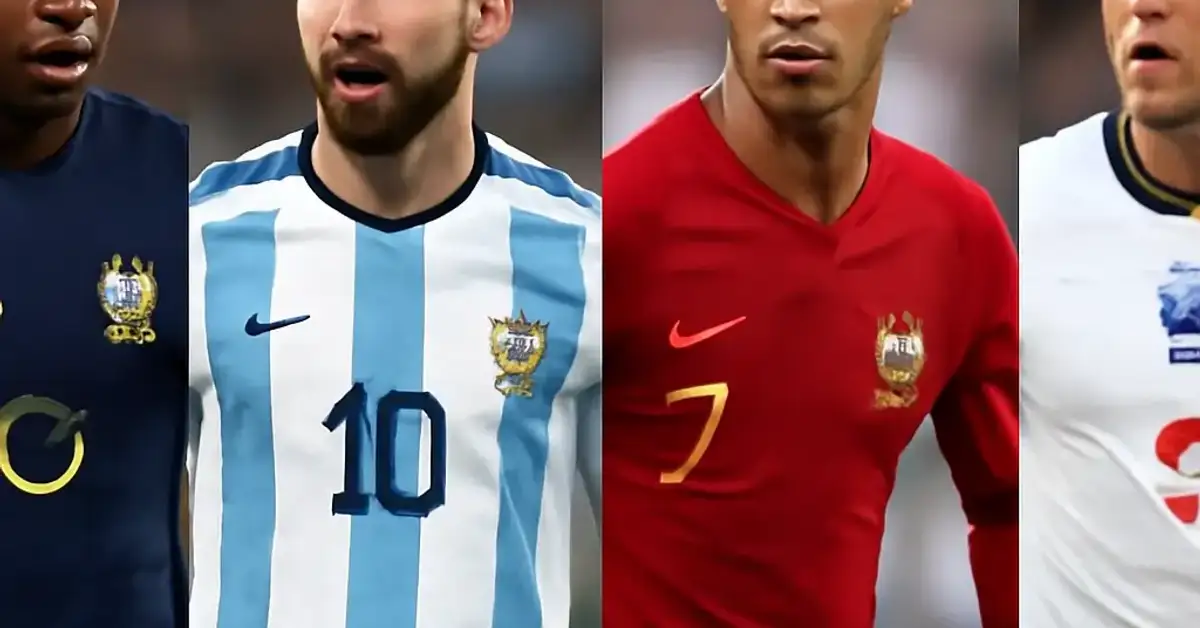
Why This World Cup Giants Preview Matters for Football Fans
The next World Cup promises to be one of the most competitive in history, and these four teams represent a fascinating mix of established dynasties and rising forces. Understanding each side’s tactical approach, key personnel, and recent form helps fans make sense of the tournament narrative before a single ball is kicked. For a related guide, see Belgium vs Egypt Prediction: Avoid This Betting Mistake for World Cup 2024.
Each squad enters with distinct ambitions. France seeks to reclaim the trophy after a heartbreaking final defeat. Argentina wants to prove their 2022 triumph was no fluke. Portugal hopes to maximize a golden generation that includes Cristiano Ronaldo and Bruno Fernandes. England, meanwhile, is hungry to end decades of near-misses on the biggest stage.
This World Cup Giants Preview breaks down the four favorites so you can follow the tournament with sharper insight and better predictions.
France: Depth That Can Overwhelm Any Opponent
Despite falling short in the last final, France remains one of the most complete squads in world football. Didier Deschamps has built a side that can adapt to any opponent, shifting between a possession-based approach and devastating counter-attacks.
Key Players to Watch
Kylian Mbappé remains the focal point of the attack, with his explosive speed and finishing ability. Alongside him, Antoine Griezmann provides creative intelligence from midfield, while Aurélien Tchouaméni anchors the engine room. The emergence of Eduardo Camavinga adds dynamism off the bench.
Tactical Identity
France tends to set up in a 4-3-3 or 4-2-3-1, relying on their full-backs to provide width while the midfield trio controls the tempo. Their defensive structure, led by Dayot Upamecano and Ibrahima Konaté, remains solid but occasionally vulnerable against quick transitions.
Expectations
Anything less than a semi-final appearance would be a disappointment. With their squad depth, France should challenge for the title—but they must avoid the complacency that sometimes creeps in after early group-stage wins. For a related guide, see World Cup 2026 Prediction: Spain vs Cape Verde – AI Says Winner Is Spain.
Argentina: The Champions Who Refuse to Fade
Argentina enters the tournament as defending champions, and under Lionel Scaloni, they have developed a clear identity that mixes defensive discipline with moments of individual brilliance. The team’s collective spirit is their greatest weapon.
Key Players to Watch
Lionel Messi remains the creative heartbeat, even as his role shifts deeper into midfield. Enzo Fernández provides energy and passing range, while Julián Álvarez offers relentless pressing and a goal threat. Emiliano Martínez continues to be a penalty-saving specialist.
Tactical Identity
Scaloni typically uses a 4-3-3 that becomes a 4-4-2 in defense, with Messi given freedom to roam. The full-backs push high, and the midfield press triggers quickly after losing possession. Set pieces remain a legitimate weapon.
Expectations
Reaching the quarter-finals is the minimum. To repeat as champions, Argentina will need Messi’s magic and a defense that stays organized under pressure. Their mental toughness gives them an edge in tight knockout matches.
Portugal: A Golden Generation Ready to Shine
Portugal has never been short on individual talent, but this squad may be their deepest ever. With a mix of veteran leadership and emerging stars, they look built for a deep run.
Key Players to Watch
Cristiano Ronaldo, now in the twilight of his career, still carries an instinct for decisive goals. Bruno Fernandes creates chances from midfield, while Rafael Leão brings raw speed and dribbling on the left wing. Rúben Dias anchors a defense that has become notably more reliable.
Tactical Identity
Manager Roberto Martínez prefers a 4-3-3 that prioritizes possession and quick passing combinations. Portugal can also switch to a 3-4-3 to overload midfield against stronger opponents. Their pressing game has improved, though transitions can still leave them exposed.
Expectations
Portugal should aim for the semi-finals. If the defense holds and Ronaldo delivers in key moments, they could go all the way. Their main challenge is handling the weight of expectation from a demanding fanbase.
England: The Wait for Glory Continues
England have come agonizingly close in recent tournaments, and under Gareth Southgate (or his successor), they now possess a generation with genuine big-game experience. The tactical question remains: can they find the right balance between attack and caution?
Key Players to Watch
Harry Kane remains the talisman, dropping deep to link play and finishing with lethal precision. Jude Bellingham has emerged as a box-to-box force, while Bukayo Saka provides width and directness. Declan Rice offers midfield stability and leadership.
Tactical Identity
England typically sets up in a 4-3-3, with full-backs pushing high and wingers cutting inside. Their pressing is coordinated but can fade late in matches. Set pieces remain a vital scoring avenue, but their possession style can become predictable against disciplined defenses.
Expectations
The minimum target is the quarter-finals. A semi-final showing would match recent standards, but the ultimate goal is lifting the trophy. England’s biggest hurdle is psychological—they need to overcome the tension that has derailed previous campaigns.
Comparing the Four Giants: A Quick Overview
| Team | Key Strength | Potential Weakness | Tournament Ceiling |
|---|---|---|---|
| France | Unmatched squad depth | Occasional defensive lapses | Champions |
| Argentina | Collective spirit and Messi | Over-reliance on key individuals | Champions |
| Portugal | Attacking firepower | Defensive transitions | Semi-finals |
| England | Tournament experience and youth | Tactical predictability | Semi-finals |
Common Misconceptions About World Cup Giants Preview Analysis
One common mistake fans make is assuming past performance guarantees future success. A team that dominated qualifying may struggle against a well-organized opponent in knockout rounds. Another trap is overrating individual brilliance without considering the tactical system—a superstar alone rarely wins a World Cup.
In this World Cup Giants Preview, we focus on squad cohesion, tactical flexibility, and mental resilience as the true indicators of a deep run. Pure talent tables can be misleading.
Useful Resources
For deeper dives into team statistics and historical performance, visit FIFA’s official World Cup hub for match schedules and squad data.
To explore tactical breakdowns and player analytics, Transfermarkt offers comprehensive squad valuations, stats, and injury updates.
Frequently Asked Questions About World Cup Giants Preview
Which team is the strongest on paper in this World Cup Giants Preview?
France and Argentina are widely considered the strongest on paper, with France’s depth and Argentina’s tactical cohesion giving them slight edges over Portugal and England.
Is Lionel Messi expected to play in the next World Cup?
Yes, Lionel Messi has indicated he intends to play, likely in a deeper creative role, though his age and fitness will be carefully managed.
What is the biggest weakness for England in this preview?
England’s biggest weakness is tactical predictability against top-tier opponents, especially when their possession style fails to break down compact defenses.
How does Cristiano Ronaldo fit into Portugal’s current system?
Ronaldo plays as a central striker but drops deep occasionally to link play; his movement off the ball remains a key threat, but his defensive contributions are minimal.
Can Argentina repeat as World Cup champions?
Yes, Argentina has the tactical structure, experience, and match-winners to defend their title, but they will face stiffer competition this time around.
What formation does France typically use?
France usually employs a 4-3-3 formation that can shift into a 4-2-3-1, depending on the opposition and in-game situations.
Who is the key midfielder for Portugal?
Bruno Fernandes is Portugal’s most creative midfielder, responsible for chance creation and set-piece delivery from central areas.
Why is England’s set-piece threat so important?
England have historically relied on set pieces to score in tight matches, especially against teams that defend deep and limit open-play opportunities.
How has France’s squad changed since the last World Cup?
France has integrated younger players like Tchouaméni and Camavinga while maintaining core veterans, giving them more dynamism in midfield.
Is this Portugal’s best-ever squad?
Many analysts believe this is Portugal’s most balanced and deepest squad, boasting strength in every position compared to previous golden generations.
What is Argentina’s biggest strength in this World Cup Giants Preview?
Argentina’s biggest strength is their collective defensive organization and the ability to control games through Messi’s positional intelligence.
Who are England’s rising stars to watch?
Jude Bellingham and Bukayo Saka are the standout rising stars, both already performing at elite levels for club and country.
Can France defend their 2018 title effectively?
France could certainly win again, but they will need to improve their consistency in knockout matches after a mixed performance last tournament.
What tactical adjustment would help England most?
England would benefit from more tactical flexibility, such as switching to a back three against strong opponents or pressing higher to force turnovers.
How important is the group stage draw for these teams?
Very important; a favorable draw allows teams to build momentum and rest key players, while a tough group can drain energy before the knockout rounds.
Which team has the best goalkeeping in this preview?
Argentina’s Emiliano Martínez and France’s Mike Maignan are both world-class, with Martínez’s penalty-saving ability giving Argentina a unique edge.
What is the biggest risk for Portugal?
Portugal’s biggest risk is defensive instability during fast transitions, especially if their full-backs push too high without adequate cover.
How does fatigue affect these teams in a World Cup year?
Players who compete deep into domestic seasons often show diminished sharpness; squad rotation and early knockout wins become crucial to managing fatigue.
Are there any underdogs that could challenge these giants?
Teams like Brazil, Germany, Spain, and Morocco have the quality to upset any of these four, especially in one-off knockout matches.
Where can I find live updates during the tournament?
Official FIFA platforms and major sports networks like ESPN, BBC Sport, and Sky Sports provide live coverage, stats, and expert analysis throughout the tournament.