
Midfield Battles Deciding Tournament Momentum Frequently Key Takeaways
Tournaments are often won not by flashy forwards or unbreakable defenses, but by the relentless chess match that unfolds in central midfield.
- The 2010 World Cup final saw Spain’s possession-based midfield suffocate the Netherlands, a textbook example of midfield battles deciding tournament momentum frequently .
- Italy’s 2006 triumph showed how a disciplined midfield unit can absorb pressure and strike when it matters most.
- France’s 2018 midfield trio—Kanté, Pogba, Matuidi—combined defensive grit with tactical intelligence to control knockout games.
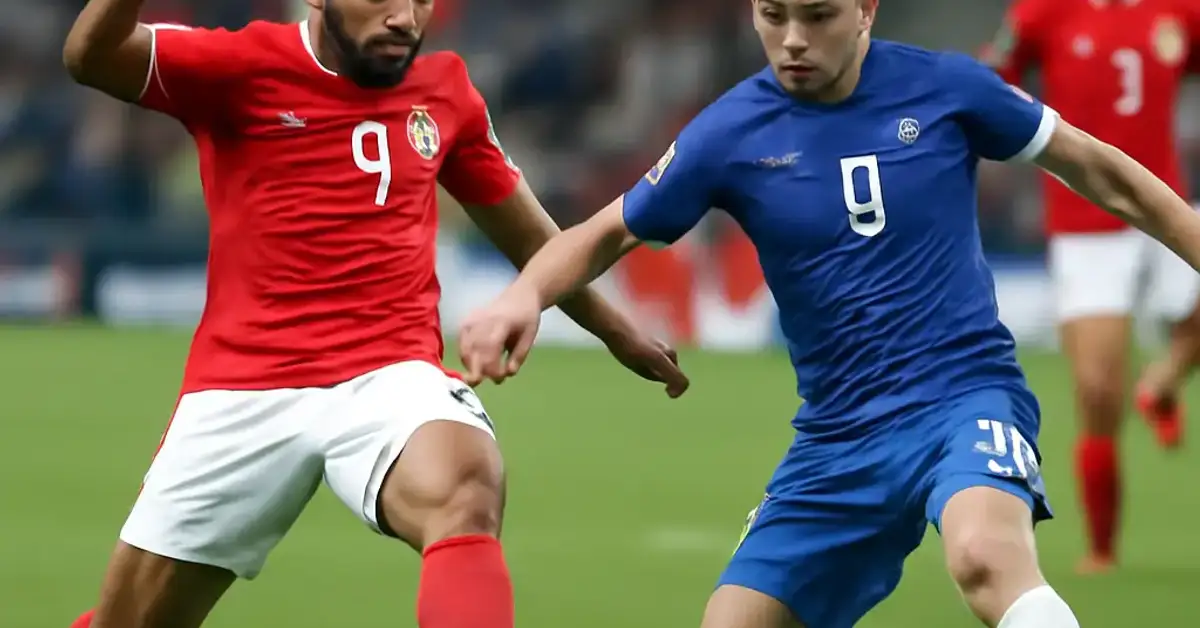
What Makes the Midfield Battles Deciding Tournament Momentum Frequently Such a Strong Predictor?
Midfield is the engine room. When two elite teams meet, the side that wins the central areas almost always gains a decisive edge. It is not just about tackles or passes; it is about dictating the game’s rhythm, disrupting the opponent’s shape, and creating overloads. In tournaments, where fatigue and mental pressure peak, a midfield that can assert control shifts momentum in ways that even the best individual defenders or strikers cannot counter alone. For a related guide, see 5 Tactical Discipline Errors Weaker National Teams Must Fix Fast.
7 Pivotal Midfield Battles That Shifted Tournament Momentum
1. 2010 World Cup Final: Spain vs. Netherlands — Possession as a Weapon
Xavi, Iniesta, and Busquets formed a triangle that choked the Dutch midfield. By keeping the ball for extended periods, Spain neutralized the Netherlands’ counter-attacking threat and forced extra time. The midfield battle tournament momentum tilted completely when John Heitinga was sent off—Spain’s control never relented.
2. 2006 World Cup Final: Italy vs. France — Gattuso vs. Zidane
Gennaro Gattuso shadowed Zinedine Zidane, disrupting his usual creativity. Italy’s midfield of Pirlo, Gattuso, and De Rossi absorbed France’s early pressure and gradually began to dominate possession. The shift was subtle but decisive: Italy grew into the game as France’s midfield tired, leading to the penalty shootout victory.
3. 2014 World Cup Semi-Final: Germany vs. Brazil — The Destruction of a Nation
Germany’s midfield—Kroos, Schweinsteiger, Khedira—dismantled Brazil 7-1. They pressed relentlessly, won every second ball, and exposed Brazil’s disorganized midfield shape. The midfield control momentum shift was immediate and irreversible, with Germany scoring four goals in six minutes.
4. 1998 World Cup Final: France vs. Brazil — Deschamps and Petit Shut Down Ronaldo
Didier Deschamps and Emmanuel Petit formed a double pivot that stifled Brazil’s midfield, isolating Ronaldo and Rivaldo. France’s importance of midfield in tournaments became clear: without service, Brazil’s attack went silent, and France scored three goals from midfield transitions.
5. 2002 World Cup Quarter-Final: England vs. Brazil — The Ronaldinho Free Kick That Changed Everything
England’s midfield, with Beckham, Scholes, and Gerrard, controlled the first half. But after Brazil equalized, Roberto Carlos and Emerson began winning duels in the middle. The midfield control momentum shift came from a quick free kick by Ronaldinho that caught David Seames off guard—a psychological blow that Brazil’s midfield exploited for the remainder of the match.
6. 2012 UEFA Champions League Final: Chelsea vs. Bayern Munich — The Midfield Resilience
Bayern dominated possession and had 35 shots, but Chelsea’s midfield of Lampard, Mikel, and Meireles pressed and blocked relentlessly. Despite being outplayed statistically, Chelsea’s midfield kept the scoreline manageable. The turning point came when Didier Drogba scored from a corner—a direct result of midfield pressure forcing Bayern into panicked clearances.
7. 2019 UEFA Champions League Semi-Final: Liverpool vs. Barcelona — The Anfield Miracle
Barcelona’s midfield of Busquets, Rakitic, and Vidal controlled the first leg, winning 3-0. But at Anfield, Liverpool’s midfield—Henderson, Fabinho, Wijnaldum—pressed so aggressively that Barcelona could not string three passes together. The midfield battle tournament momentum shifted within 15 minutes, and Liverpool completed a historic 4-0 comeback.
Tactical Trends in Midfield Battles Deciding Tournament Momentum Frequently
Modern tournaments reveal three clear trends:
- Work-rate over pure creativity: Teams with high-pressing midfielders (like Kanté, Henderson, Gattuso) often upset more technical opponents.
- Double pivots provide defensive stability: A pairing of two midfielders offers cover for aggressive full-backs and attacking forwards.
- Set-piece dominance from midfield disruptions: Midfield turnovers often lead to fast counter-attacks and set-piece opportunities, which decide tight knockout games.
How to Analyze a Midfield Battle Tournament Momentum in Real Time
Look for these signs during a match:
- Second ball recovery: Which midfield duo wins loose balls after aerial challenges?
- Passing sequences: A team that strings more than five passes together in midfield is starting to control momentum.
- Physical duels in central zones: If a defensive midfielder dominates his direct opponent, the team gains a platform to attack.
Useful Resources
For a deeper statistical breakdown of midfield performance in tournaments, FIFA’s Technical Reports provide match-by-match analysis of passing networks, duels won, and positional dominance.
To track live midfield metrics during games, WhoScored offers detailed player ratings, tackles, interceptions, and passing accuracy charts.
Conclusion: The Eternal Importance of Midfield Battles Deciding Tournament Momentum Frequently
From the silky triangles of Spain 2010 to the relentless pressing of Liverpool 2019, the evidence is overwhelming. Teams that win the midfield shift tournament momentum. The next time you watch a high-stakes knockout match, ignore the glamorous goals and watch the engine room. That is where tournaments are truly won and lost. For a related guide, see FIFA World Cup 2026 Today: 4 Essential Openers You Can’t Miss.
Frequently Asked Questions About Midfield Battles Deciding Tournament Momentum Frequently
What does “midfield battle deciding tournament momentum frequently” mean?
It refers to the consistent pattern where the team that wins the central midfield zone gains a decisive psychological and tactical advantage that shifts the flow of a knockout match.
Why is midfield control so important in tournament football?
Midfield is the link between defense and attack. Controlling it allows a team to dictate tempo, recover second balls, and create overloads that break down compact defensive shapes.
Which tournament final had the most dominant midfield performance?
The 2010 World Cup final, where Spain’s trio of Xavi, Iniesta, and Busquets completed over 700 passes and completely nullified the Netherlands’ counter-attacks.
Can a team win a tournament without a strong midfield?
Extremely unlikely. Even defensively minded champions like Greece 2004 relied on a compact midfield screen that disrupted opponents and launched quick transitions.
How do analysts measure midfield dominance?
Key metrics include possession percentage in the middle third, number of through balls completed, duels won, interceptions, and passes into the final third.
What is a “second ball” and why does it matter?
A second ball is the loose ball after an aerial challenge. Winning it gives a team immediate possession in dangerous areas and is a common indicator of midfield control.
Which modern midfielder is most decisive in tournament midfield battles?
N’Golo Kanté has consistently influenced tournament momentum, most notably for France in 2018 and Chelsea in 2021, by winning duels and covering enormous ground.
How do set pieces relate to midfield battles?
Midfield turnovers often force teams into desperate clearances that result in corners or free kicks. A strong midfield can then capitalize on these set-piece opportunities.
What is the “pivot” in midfield?
The pivot is a single holding midfielder or a double pairing that sits in front of the defense, tasked with breaking up attacks and distributing the ball forward.
Does the 4-3-3 formation guarantee midfield control?
Not automatically. The 4-3-3 provides numerical superiority, but if the midfield three are outworked or outmaneuvered by a 4-4-2 diamond or a 3-5-2, control can still be lost.
Can a team dominate midfield without holding possession?
Yes. Teams like Italy 2006 and Chelsea 2012 disrupted opponents through physical pressing and tactical fouling, winning the midfield battle without high possession stats.
How did Brazil 2002 win the World Cup with a defensive midfield approach?
Brazil’s midfield of Gilberto Silva and Kleberson provided a solid shield, allowing Ronaldinho, Rivaldo, and Ronaldo to operate with freedom. They won duels and distributed quickly to the attacking trio.
What is the “Luis Suárez effect” on midfield momentum?
When a striker drops deep to collect the ball, it often unsettles the opposition midfield and creates space for midfield runners. This can shift momentum toward the attacking team.
Are midfield battles more important than individual genius in tournaments?
Data suggests yes. While individual moments win games, sustained momentum and tournament victories heavily correlate with midfield dominance over multiple matches.
How do substitutions affect midfield momentum?
Fresh legs in midfield can revitalize press intensity or bring new tactical patterns. An example is Liverpool’s substitution of Wijnaldum in 2019, which helped shift momentum in the second leg against Barcelona.
What role does the referee play in midfield battles?
A lenient referee allows more physical duels, which can favor defensive midfielders. A strict referee may penalize tactical fouling, disrupting a team’s disruptive strategy.
How did Manchester City dominate midfield to win the 2023 Champions League?
Pep Guardiola’s use of Stones as a “false full-back” created a 3-2-4-1 shape that overloaded central zones, giving City numerical superiority in every midfield duel against Inter Milan.
Is the midfield battle more important in club or international tournaments?
Both, but international tournaments often magnify midfield impact because national team squads have less time to build cohesion, making a organized midfield a greater advantage.
Can a team lose momentum despite winning the midfield battle?
Yes, if the midfield domination does not produce clear chances or if the defense makes individual errors, the momentum can still favor the opponent regardless of midfield control.
What is the single most important piece of advice for coaches regarding midfield battles?
Prioritize tactical discipline and physical stamina over individual flair. A midfield unit that knows when to press, when to drop, and how to cover space will consistently shift tournament momentum in its favor.