
Iran s World Cup Campaign Key Takeaways
Iran’s journey to the 2022 World Cup in Qatar carried weight far beyond the pitch, unfolding against a backdrop of widespread protests and political pressure at home.
- Iran’s World Cup campaign was marked by visible fan protests inside stadiums and on social media, linking sports to political expression.
- Historical context reveals that Iranian teams have long navigated political currents, from the 1998 victory over the USA to modern-day boycotts.
- Player decisions to remain silent or speak out affected team morale and public perception, illustrating the delicate balance of playing for a nation in flux.
Understanding the Stakes: Why Iran’s World Cup Campaign Was Never Just About Soccer
When Iran stepped onto the pitch for their first group match against England in November 2022, the air in the Khalifa International Stadium felt charged with more than just pre-game adrenaline. The team’s refusal to sing the national anthem—a symbolic act that rippled across the globe—signaled that Iran’s World Cup campaign was inseparable from the political upheaval gripping the country. At home, the “Woman, Life, Freedom” movement had been reshaping the social landscape since September, and the World Cup became an unexpected stage for that struggle.
This was not the first time Iranian football intersected with politics. In 1998, a famous 2-1 victory over the United States was celebrated as a moment of national pride and diplomatic thaw. But the context in 2022 was different: the state was using the team as a propaganda tool, while many fans saw the players as reluctant symbols of a regime they opposed. Understanding this tension is key to grasping the full meaning of Iran’s World Cup campaign. For a related guide, see FIFA World Cup 2026 Host Countries: Guide to Cities and Stadiums.
Historical Roots: Iran at the World Cup
Iran has qualified for the World Cup six times, with their best performance reaching the group stage in 1998, 2014, and 2018. Each appearance has carried political undertones—from the 1998 “match for peace” to the 2018 protests inside stadiums during games against Spain and Portugal. By 2022, the pattern was clear: Iranian football reflects the nation’s struggle for identity between state control and popular will. For a related guide, see FIFA World Cup 2026 Today: 4 Essential Openers You Can’t Miss.
Fan Reactions: Anecdotes of Protest and Pride
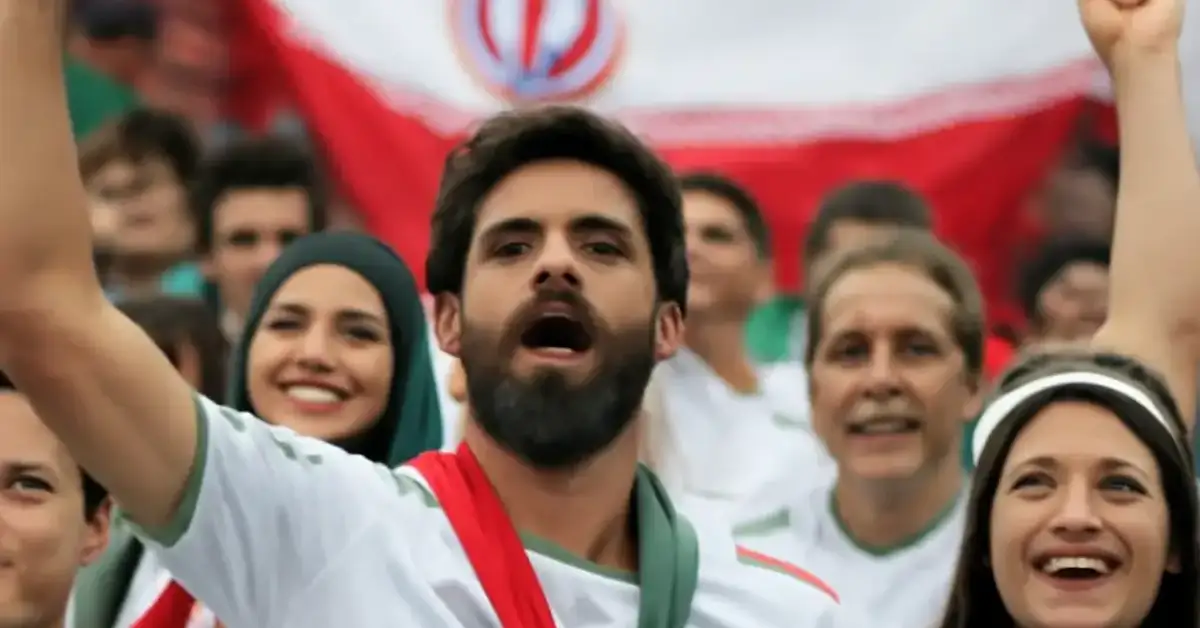
Inside stadiums in Qatar, Iranian fans were a divided but vocal presence. Some waved the national flag—a symbol of unity for many—while others held up signs calling for freedom. Social media offered a raw, unfiltered window into these emotions. One widely shared Twitter post from a fan in Tehran read: “I want to cheer for my team, but I can’t ignore what’s happening on my streets. Every goal feels like a question, not an answer.”
Another fan, a young woman who had attended the England match, described her experience: “We sang the anthem quietly, then we shouted for the team. It was confusing. You love your country, but you hate what it has become.” These anecdotes underscore the central paradox of Iran’s World Cup campaign: the players themselves became vessels for a debate that extended far beyond the sport.
Social Media as the New Stadium
Platforms like Twitter, Instagram, and Telegram buzzed with reactions that bridged the gap between Doha and Tehran. Hashtags such as #IranWorldCup and #MahsaAminiTrended alongside match updates. One viral video showed an Iranian fan in the stands unfurling a banner that read “Woman, Life, Freedom” before being removed by security. The clip amassed over two million views within hours, illustrating how Iran’s World Cup campaign became a digital protest site.
How Political Tensions Shaped Team Decisions and Performance
The senior players, including captain Ehsan Hajsafi and star forward Mehdi Taremi, faced immense pressure to take a stand. Before the tournament, Hajsafi made a public statement acknowledging the protests: “Our people are not happy with the situation. We are with them.” However, the team stopped short of full-throated political defiance, perhaps fearing repercussions for themselves and their families back home. This middle ground—expressing sympathy without direct condemnation—defined Iran’s World Cup campaign.
On the field, the results were mixed. A 6-2 loss to England exposed defensive frailties, but a spirited 2-0 win over Wales revived hopes and briefly unified fans across political lines. The final group match against the USA—a 1-0 defeat that eliminated Iran—was played in an atmosphere thick with political symbolism. For many Iranians, the loss felt like a metaphor for a country struggling to reconcile its past with its future.
Practical Steps the Team Took to Navigate the Crisis
- Private meetings with players and staff: The coaching staff held closed-door sessions to address mental health and safety concerns, allowing players to express fears without media scrutiny.
- Community outreach via social media: Players posted carefully worded messages on Instagram that acknowledged fans’ pain without explicitly criticizing the regime.
- Balancing focus and symbolism: The decision to show support for protesters through collective gestures (e.g., silence during the anthem) rather than individual statements minimized risk while conveying solidarity.
The Bigger Picture: National Pride and Its Fragile Future
Ultimately, Iran’s World Cup campaign leaves behind a legacy as complex as the nation itself. For some fans, the team’s resilience on the pitch remains a source of pride disconnected from politics. For others, the tournament exposed the impossibility of separating sport from the state. As one Iranian journalist noted, “Football will never be just football in Iran again.” This reality has implications for future campaigns: players will continue to be seen as political actors, and the regime will likely tighten its control over the national team.
The story of Iran at the 2022 World Cup is not unique—similar tensions have emerged in other nations where sports and politics collide—but it offers a powerful lens on how ordinary people navigate extraordinary times. For readers interested in the intersection of global politics and international football, this case study reveals the emotional weight carried by every pass, goal, and anthem.
Practical Strategies for Understanding Iran’s World Cup Campaign Going Forward
If you want to follow future World Cup cycles involving politically charged nations, consider these steps:
- Monitor local news sources: Sites like Iran International provide coverage that balances official statements with on-the-ground reporting.
- Track social media trends: Hashtags and viral content often reveal sentiment that state media downplays.
- Analyze player statements: Subtle word choices in post-match interviews can indicate underlying tensions.
- Compare historical contexts: Understanding previous tournaments helps decode recurring patterns of protest and pride.
Useful Resources
For deeper analysis of Iran’s political and sports nexus, explore these external links:
- BBC Sport: Iran’s World Cup journey – a timeline of protest and pride
- The Guardian: How Iran’s World Cup campaign became a stage for protest
Frequently Asked Questions About Iran s World Cup Campaign
What role did political protests play in Iran’s World Cup campaign?
The nationwide “Woman, Life, Freedom” protests directly influenced the team’s gestures, such as refusing to sing the national anthem, and shaped fan reactions inside and outside stadiums.
Did Iran’s players openly support the protests?
While no player explicitly condemned the regime, captain Ehsan Hajsafi issued a nuanced statement acknowledging public unhappiness. The team collectively showed solidarity by remaining silent during the anthem.
How did Iranian fans react to the team’s silence during the anthem?
Reactions were mixed. Many inside Iran cheered the gesture as a sign of support for protesters, while others felt it politicized the team and detracted from the sport.
What was the result of Iran’s group stage matches?
Iran lost 6-2 to England, defeated Wales 2-0, and lost 1-0 to the USA, finishing third in Group B and failing to advance to the knockout stage.
How did social media affect Iran’s World Cup campaign?
Platforms like Twitter and Instagram amplified protest messages, with viral videos of fan banners reaching millions. Hashtags like #IranWorldCup trended alongside political slogans.
What is the historical context of Iran at the World Cup?
Iran first qualified in 1978 and has appeared six times. The 1998 victory over the USA was a diplomatic highlight, while later tournaments saw growing political tensions reflected in fan behavior.
How did the Iranian government use the World Cup for propaganda?
State media portrayed the team as a symbol of national unity, downplaying protests. Officials also restricted coverage of fan dissent and attempted to control player messaging.
Were any Iranian players or fans detained for protesting during the World Cup?
At least two Iranian fans in Qatar were briefly detained for displaying protest banners. Inside Iran, no major arrests of players were reported, but several online activists faced harassment.
How did the rest of the world perceive Iran’s World Cup campaign?
International media largely framed the team’s performance as a proxy for the country’s political crisis, with many outlets focusing on the anthem protest and fan reactions.
What did Iranian women experience during the World Cup?
Women attended matches in Qatar without restrictions, a stark contrast to the ban in Iran. Some used the opportunity to hold up signs advocating for women’s rights, drawing attention from global media.
Did the Iran team face any FIFA sanctions for political gestures?
FIFA did not penalize Iran for the anthem silence, as it was considered a symbolic act rather than a direct political statement. However, FIFA rules prohibit political messages on attire and equipment.
What were the main challenges for Iranian players during the tournament?
Players struggled with emotional pressure from families, fear of reprisal, and the need to focus on competitive football while being constantly questioned about politics.
How did Iran’s World Cup campaign compare to previous appearances?
It was the most politically charged campaign since 1998, with far greater social media scrutiny and a more polarized fan base due to the ongoing protests.
What happened to the team after elimination?
Players returned to their club sides. Some faced online backlash from hardliners, while others were praised by diaspora communities. The Iranian football federation later dismissed head coach Carlos Queiroz.
Did the Iranian government ban coverage of fan protests at home?
Yes, state-controlled outlets omitted images of protest banners and limited reporting on fan dissent, instead focusing on match highlights and official statements.
Are there any books or documentaries about Iran’s World Cup campaigns?
Yes, the documentary “Football and the Iranian Revolution” (2020) provides context, and the book “Iran at the World Cup” by James Montague offers historical analysis through a political lens.
How did the presence of the Iranian diaspora in Qatar affect the campaign?
Diaspora fans organized gatherings, held up protest signs, and sang political songs inside stadiums, creating a visible counter-narrative to the regime’s official portrayal.
What was the significance of the Wales match in Iran’s World Cup campaign?
The 2-0 victory temporarily united fans across political divides, offering a moment of pure sporting joy that transcended the ongoing tensions.
Did any foreign diplomats comment on Iran’s World Cup campaign?
Several Western diplomats noted the irony of Qatar hosting a tournament while Iran suppressed protests; the US State Department explicitly linked the team’s silence to the “Woman, Life, Freedom” movement.
What are the long-term implications for Iranian football?
The campaign likely accelerated the politicization of the sport, making it harder for future teams to avoid taking sides. Domestic leagues may face stricter government oversight, and player emigration could increase.