
football intelligence Key Takeaways
Football intelligence separates elite teams from good ones, especially when the game turns chaotic.
- Football intelligence helps teams anticipate pressure rather than react to it, turning defensive scrambles into organized shape.
- Effective match management relies on situational awareness: knowing when to slow the tempo, when to press, and when to shift formations.
- Real-world examples from top clubs show that the most controlled performances often come from the most difficult matches.
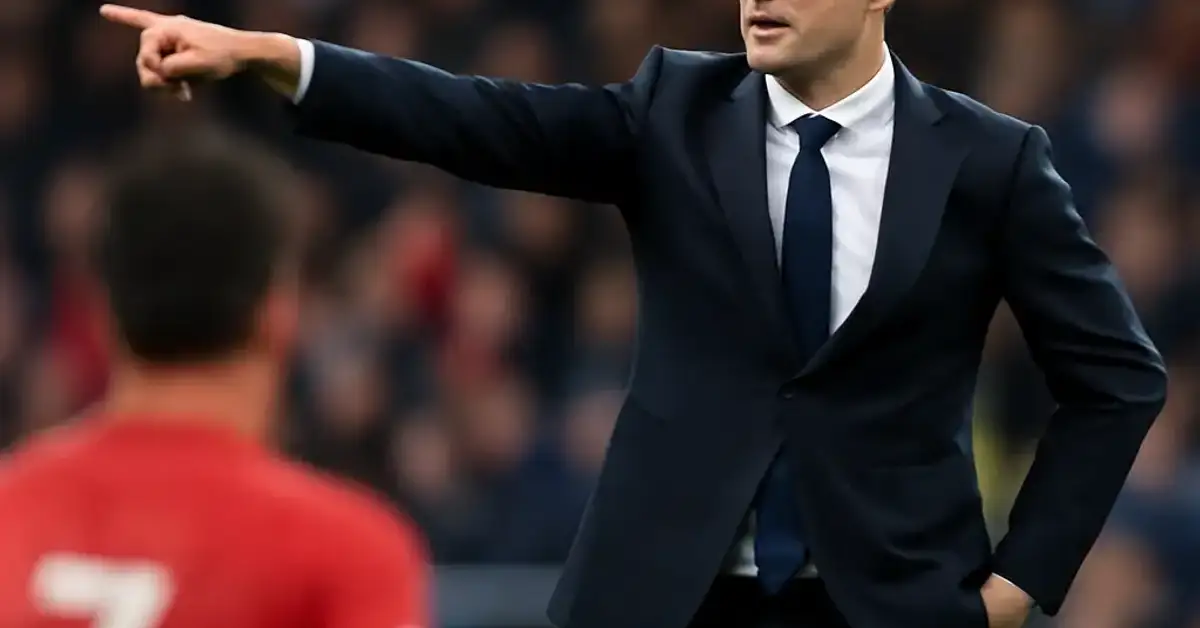
Why Football Intelligence Decides Control in Difficult Matches
Every football coach knows the feeling: the opposition scores early, the crowd turns hostile, or an injury forces a reshuffle. In those moments, raw talent isn’t enough. What teams need is football intelligence — the collective ability to read the game, make quick decisions, and execute a plan under pressure. This article breaks down seven proven strategies that clubs use to turn chaotic matches into controlled performances. For a related guide, see 5 Proven Goalkeeping Standards for Reaching Higher Competitive Levels.
Strategy 1: Pre-match Scenario Planning
The best teams control difficult matches before they even start. Coaches and analysts prepare for multiple scenarios: going a goal down, playing against ten men, or facing a high-pressing opponent. This requires deep football intelligence from the entire staff. For a related guide, see Fixture Congestion: 5 Proven Risks That Challenge Fitness Management.
Map Out “What If” Situations
During the week, review past difficult matches and identify common turning points. For each scenario, define a clear tactical response — for example, if your team concedes in the first 15 minutes, switch from a 4-3-3 to a 4-2-3-1 to regain midfield control. Having a pre-agreed plan removes hesitation on the pitch.
Assign Decision-Makers
Designate a leader — usually the captain or the defensive organizer — who can communicate tactical shifts without waiting for the bench. This decentralizes football intelligence, allowing fast adjustments during high-pressure phases.
Strategy 2: Maintain Compact Defensive Shape Under Pressure
When a match becomes difficult, the natural instinct is to drop deeper and protect the goal. But good football intelligence means staying compact, not just deep. A compact block restricts space for the opponent to play through, forcing them into wide areas or long shots.
Vertical Compactness
Keep the distance between the back line and the midfield line under 25 metres. This prevents dangerous through-balls and gives defenders shorter distances to cover. Drills like “shadow play” help players internalize these distances.
Horizontal Shifts
When the ball moves laterally, the entire block should slide as one unit. Difficult matches control often hinges on whether the team shifts quickly enough to deny the switch of play. Use live opposition footage to highlight weak shifts from previous games.
Strategy 3: Intelligent Tempo Management
Controlling the rhythm of a match is a hallmark of high football intelligence. Teams that rush when they should slow down — or slow down when they should accelerate — lose control.
Slow Down to Breathe
After conceding or absorbing heavy pressure, take the sting out of the game. Use short passes, keep possession in safe zones, and reset positions. This tactic disrupts the opponent’s momentum and gives your team time to reorganize.
Accelerate at Vulnerable Moments
The moment an opponent overcommits or loses shape, increase tempo. Quick transitions, early crosses, and direct runs punish disorganization. Match management tactics like this require players to constantly scan the field and react as a unit.
Strategy 4: Situational Pressing Triggers
Pressing every ball for 90 minutes is impossible. Elite teams use football intelligence to identify specific triggers for high-intensity pressing: a poor touch, a difficult pass for the opponent, or a moment of hesitation.
Train Visual Cues
Watch video of the upcoming opponent and note patterns that signal a pressing opportunity — for example, when the centre-back looks down before passing. Teach players to recognize these cues in real time.
Zonal Triggers
Press hard only in specific zones (e.g., the opponent’s defensive third). If the ball moves past midfield, drop into a mid-block. This conserves energy and prevents being played through. Football intelligence is as much about when not to press as when to press.
Strategy 5: Flexible Formation Adjustments
Rigid formations break under pressure. Teams with high football intelligence can shift seamlessly between shapes within the same match. For example, a 4-3-3 can become a 4-4-2 in defence and a 3-2-5 in attack.
In-Game Shape Changes
If the opponent is overloading your left flank, instruct the left winger to drop into a midfield four. If you need to protect a lead, pull your striker deeper to form a 4-5-1. These adjustments require clear communication and players who understand multiple roles.
Use Substitutions to Enable Shape Change
A fresh full-back or winger can change the formation without confusing the rest of the team. Difficult matches control often comes from the bench, not just the starting eleven.
Strategy 6: Emotional Regulation and Decision-Making
Football intelligence isn’t just tactical — it’s emotional. In difficult matches, players who stay calm make better decisions. Coaches must build a culture where emotional control is valued as much as technical skill.
Breathing and Reset Rituals
Teach players simple routines after a mistake or a goal conceded — a deep breath, a visual check of positions, a quick affirmation. These micro-rituals prevent emotional spirals.
Leader-Led Calming Signals
Identify two or three players who can gesture or verbally calm the team during chaotic spells. This decentralizes emotional football intelligence, especially when the coach’s voice can’t be heard over the crowd.
Strategy 7: Real-Time Data Analysis and Feedback
Modern football intelligence is supported by technology. Wearable GPS trackers and live stats provide insights during the match, allowing coaches to adjust tactics mid-game.
Track Physical Load
If a key midfielder is below 60% of their typical sprint distance by the 60th minute, it’s time to substitute or shift responsibilities. Live data prevents tired players from making costly errors.
Use Half-Time Video Triggers
Tablets with clipped moments from the first half — especially defensive shape errors or pressing failures — help players see the issue rather than just hear it. Match management tactics improve dramatically when players understand the “why” behind a change.
Real-World Example: How Top Teams Apply Football Intelligence
Consider Liverpool’s 2019 Champions League semi-final second leg against Barcelona. After losing 3-0 away, they needed to control a nearly impossible match at Anfield. Their football intelligence showed in constant pressing triggers, compact defensive blocks, and quick tempo changes. They didn’t panic — they executed a pre-scouted plan that exploited Barcelona’s narrow defensive shape. The result: a 4-0 win and a famous comeback.
Similarly, Italy’s Euro 2020 campaign demonstrated difficult matches control against high-pressing teams like Belgium and Spain. They used intelligent tempo management — slowing down after absorbing pressure, then accelerating into space — to dictate the flow of knockout games.
Common Mistakes That Undermine Football Intelligence
Even experienced teams fall into traps. Recognizing these errors is part of developing football intelligence:
- Over-rotating shape too early: Changing formation before the team is settled can cause confusion and concede more space.
- Ignoring emotional cues: A frustrated player makes poor decisions. Coaches who only think tactically miss the human factor.
- Reactive substitutions: Waiting until the score changes wastes precious time. Proactive changes, based on data or observed patterns, preserve control.
- Lack of rehearsal: Players can’t execute what they haven’t practiced. Scenario drills should be part of weekly training.
How to Train Football Intelligence in Your Team
Developing football intelligence is an ongoing process. Here are three practical drills coaches can implement tomorrow:
Cognitive Overload Small-Sided Games
Play 5v5 with extra rules — e.g., each player must touch the ball twice before passing, or the team must switch formation every five minutes. This forces quick decision-making and adaptation.
Video Decision-Making Sessions
Show 30-second clips from your own matches (or pro matches) and pause at key moments. Ask players: “What do you see? What would you do next?” Discuss answers as a group.
Constraint-Led Drills
Add constraints that mimic difficult match situations — e.g., start each drill with a 1-0 deficit, or reduce the team to ten players. This builds resilience and creative problem-solving.
Useful Resources
For deeper dives into football intelligence and match management tactics, explore these credible resources:
- The Coaching Site: Situational Awareness in Football — Practical drills and case studies for developing game-reading skills.
- Spielverlagerung: Control in Difficult Matches — Tactical analysis of how top clubs maintain control under pressure.
Frequently Asked Questions About football intelligence
What is football intelligence exactly?
Football intelligence is the ability to read the game, make quick decisions, and execute the right action under pressure. It combines tactical awareness, spatial understanding, and emotional control.
How can a team improve football intelligence ?
Through video analysis, constraint-led drills, scenario planning, and regular communication exercises. It’s a skill that can be coached, not just a natural talent.
Is football intelligence the same as game IQ?
Yes, they are often used interchangeably. Both refer to a player’s or team’s mental processing speed and decision-making quality during a match.
Why is football intelligence important for controlling difficult matches?
In difficult matches, chaos and pressure disrupt normal patterns. Teams with high football intelligence can adapt quickly, maintain shape, and exploit opponent weaknesses, turning the game back in their favour.
Can young players develop football intelligence ?
Absolutely. Expose young players to varied situations, small-sided games, and reflective video sessions. The earlier they start, the more automatic good decisions become.
What role do coaches play in building football intelligence ?
Coaches design the training environment, ask probing questions, and create scenarios that mimic match pressure. They also model calm decision-making on the sideline.
How can a team control a match when they are under heavy pressure?
Stay compact, slow the tempo, and look for one or two outlets to relieve pressure — a long ball to a target striker or a quick pass to a free full-back. Difficult matches control starts with a resolute defensive shape.
What are pressing triggers?
They are visual cues — like a heavy touch or a back-pass under pressure — that signal the team to collectively press. Training these triggers improves football intelligence by creating automatic responses.
How do top clubs use match management tactics during tough games?
They adjust formations, manage tempo, use substitutions to change shape, and rely on experienced players to communicate calming messages. Many also use live data for real-time tactical shifts.
What is a compact defensive block?
It’s a defensive shape where the distance between the back line and midfield line is minimized, and the team shifts laterally as a unit. This restricts space and makes it harder for opponents to play through.
Can a team control a match without possession?
Yes. Controlling space and dictating where the opponent can play is a form of control. Counter-attacking teams often use low blocks and quick transitions to manage difficult matches.
How long does it take to build football intelligence in a squad?
It depends on the starting point, but noticeable improvements can appear within 6–8 weeks of deliberate training. Deeper ingrained habits take a season or more.
What are common signs of low football intelligence during a match?
Players running into each other, failing to shift as a unit, losing shape when pressed, and making predictable passes under pressure are all signs of underdeveloped football intelligence.
How does emotional control affect football intelligence ?
Emotions like frustration or panic reduce cognitive bandwidth, making it harder to spot passing options or track opposition runs. Calm players make smarter decisions.
What is the best drill for improving match management tactics ?
Constraint-led small-sided games are highly effective. For example, play 7v7 where one team starts 1-0 down and must score within 10 minutes — it forces them to manage both the scoreline and the clock.
Can football intelligence be measured?
Indirectly. Metrics like pass completion under pressure, successful defensive shifts, and decision-making records (e.g., number of good pressing triggers per game) give a useful picture.
How do data and analytics support football intelligence ?
Live match data — such as heat maps, sprint distances, and pass networks — helps coaches spot patterns that are invisible to the naked eye, enabling more precise tactical adjustments.
What is the role of the captain in difficult matches control ?
The captain acts as the coach’s on-field extension, communicating tactical shifts, calming teammates, and ensuring shape discipline. A captain with high football intelligence is invaluable in tough games.
Are there differences between football intelligence for defenders vs. attackers?
Yes. Defenders must read space and pressing triggers, while attackers need to exploit gaps and time runs. But both rely on the same core ability: quick, accurate decision-making based on the game state.
Can a team with less talent control a match using football intelligence ?
Absolutely. Many famous underdog victories were built on superior structure, discipline, and game management. Football intelligence levels the playing field against more talented sides.