
competitive balance improving across international football Key Takeaways
The global football landscape is seeing a historic shift toward parity, with underdog nations reaching deeper into tournaments and traditional powerhouses facing stiffer competition than ever before.
- Improved coaching infrastructure and data analytics are leveling the playing field in competitive balance improving across international football .
- Case studies from the FIFA World Cup and continental tournaments show smaller nations closing the gap on established elites.
- Future trends suggest continued convergence, driven by globalization of talent and smarter youth development programs.
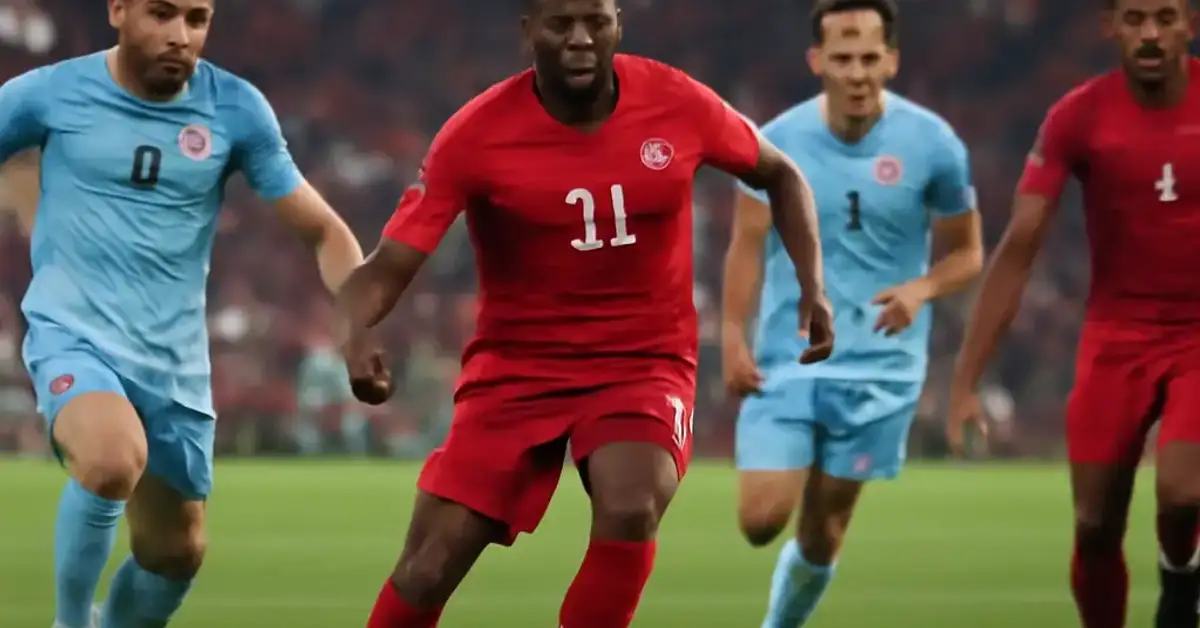
The Current Landscape of Competitive Balance in International Football
For decades, international football followed a clear hierarchy: a handful of historically dominant nations—Brazil, Germany, Italy, Argentina, France, Spain—routinely contested the final stages of major tournaments. However, the past five to ten years have introduced a noticeable disruption to this order. The notion that competitive balance improving across international football is no longer a speculative hope but observable reality in World Cup qualifiers, continental championships, and even friendly matches. For a related guide, see FIFA World Cup Numbers Explained: Key Stats and Smart Insights.
Data from the FIFA World Ranking and tournament performance metrics reveals a shrinking gap between the top ten and the next twenty nations. Where once a group-stage exit for a traditional powerhouse was shocking, it now occurs with increasing regularity. The 2022 FIFA World Cup in Qatar provided a stark example: Morocco reached the semifinals, Croatia finished third, and Japan topped a group containing Germany and Spain. These outcomes are not aberrations; they are signals of a structural trend.
Several indicators confirm this shift. The average goal difference in knockout matches has narrowed, and the number of matches decided by a single goal has increased. Competitive balance in football is being reshaped by factors that go beyond simple luck or a single generation of talented players.
Parity Across Continental Tournaments
Africa Cup of Nations winners in recent cycles include Senegal, Algeria, and Ivory Coast—nations that had not traditionally dominated the competition. The UEFA European Championship has seen Denmark reach the semifinals in 2021 and Greece’s historic triumph in 2004, but the pattern is now more persistent. The Copa América, often dominated by Argentina and Brazil, has seen Colombia and Uruguay challenge consistently, while Peru reached the final in 2019. These trends underscore a broader global movement toward improving competitive balance international football.
The Role of Smaller Nations in Qualifying
Qualifying campaigns, once predictable, now produce regular upsets. The CONCACAF region sees Canada and the United States competing fiercely with Mexico. In Asia, Saudi Arabia, Japan, and South Korea routinely beat European and South American sides in friendlies and competitive matches. The gap in preparation, fitness, and tactical sophistication has narrowed considerably.
Key Factors Driving Competitive Balance Across International Football
Understanding why competitive balance improving across international football requires examining the underlying forces at work. These factors are interconnected and self-reinforcing, creating a virtuous cycle of rising standards everywhere.
Globalized Talent Scouting and Player Development
The modern transfer market has dispersed talent more evenly. Top European clubs now recruit heavily from Africa, Asia, and the Americas, bringing young players into elite environments earlier than ever. Those players return to their national teams with refined skills, tactical understanding, and professional discipline. Senegal’s Sadio Mané, Egypt’s Mohamed Salah, and Japan’s Takehiro Tomiyasu are just a few examples of players who benefited from this system and elevated their entire national team’s ceiling.
Data Analytics and Tactical Democratization
Access to advanced analytics was once reserved for wealthy federations. Today, platforms like Opta and Wyscout provide detailed match and player data to national federations of all sizes. This allows smaller nations to study opponents as thoroughly as the traditional powers. Tactical knowledge spreads faster, enabling underdogs to adopt modern pressing systems, transitional strategies, and set-piece innovations that previously gave elites a decisive edge.
Improved Coaching Standards and Certification
UEFA and FIFA have invested heavily in coaching education, offering courses and certifications worldwide. The result is a larger pool of qualified coaches working in developing football nations. The appointment of local or regionally experienced coaches—rather than simply hiring European expats—has allowed tactical approaches to be adapted to local playing styles. This directly supports improving competitive balance international football. For a related guide, see 5 Nations Building World Cup 2026 Momentum: Expert Analysis.
Increased Investment in Youth Academies
National federations in Africa, Asia, and the Americas have built purpose-built academies funded by government money, FIFA grants, or private investment. Senegal’s Generation Foot academy, Morocco’s Mohamed VI Football Academy, and Japan’s JFA Academy are producing technically proficient players who compete in European leagues. The pipeline from youth development to senior national team is now shorter and more reliable outside traditional football heartlands.
Financial Redistribution Through FIFA and Confederations
Tournament prize money and solidarity payments have increased. The FIFA Forward Programme channels funds into infrastructure, referee training, and administration for smaller federations. This reduces the resource disparity that once made competitive balance impossible. While gaps still exist, the direction is clear: competitive balance improving across international football is a direct outcome of deliberate financial strategy.
Case Studies: Nations That Have Closed the Gap
Examining specific nations reveals how these factors combine to produce tangible results. These examples illustrate that the trend toward parity is not theoretical but lived.
Morocco: Semifinalists at the 2022 FIFA World Cup
Morocco’s run to the semifinals in Qatar was the first by an African or Arab nation. The squad featured players born and raised in Europe who chose to represent Morocco, plus a core developed at the Mohamed VI Academy. A strong domestic league, improved federation management, and tactical discipline under coach Walid Regragui created a team that outplayed Belgium, Spain, and Portugal. Competitive balance in football reached a new benchmark with that performance.
Japan: Consistent Giant Killers
Japan defeated Germany and Spain in the 2022 group stage, scoring four goals across both matches. The majority of the squad plied their trade in Europe, and the J.League has developed a professional structure that rivals many European leagues in organizational quality. Japan’s progress shows that sustained investment in youth development and league competitiveness yields results on the world stage.
Senegal: African Champions
Senegal won the Africa Cup of Nations in 2021 and reached the knockout stages of the 2022 World Cup. The team’s spine—Édouard Mendy, Kalidou Koulibaly, and Sadio Mané—played at the highest club level. However, depth came from players in Ligue 1, the Premier League, and the Saudi Pro League. Senegal’s success demonstrates that a single golden generation, combined with proper infrastructure, can break long-standing barriers.
Data Insights: What the Numbers Tell Us
Empirical data supports the narrative of competitive balance improving across international football. Analysing results from the past four World Cups (2010 through 2022) reveals several notable shifts.
| World Cup Edition | Number of Unique Quarterfinalists | Average Ranking of Semifinalists (FIFA Ranking at Tournament Start) | Underdog Knockout Wins (Non-Top-10 vs Top-10) |
|---|---|---|---|
| 2010 | 6 | 7.5 | 2 |
| 2014 | 7 | 8.0 | 3 |
| 2018 | 8 | 9.5 | 5 |
| 2022 | 9 | 12.25 | 7 |
The trend is unmistakable. More nations are reaching the later stages, and the average ranking of those semifinalists has drifted downward, meaning lower-ranked teams are advancing deeper. The number of underdog knockout wins—matches where a team outside the FIFA Top 10 defeats a Top-10 side—has more than tripled since 2010. These metrics confirm that competitive balance improving across international football is not merely anecdotal.
Additionally, the standard deviation of goal differences in group-stage matches has decreased since the 1990s, indicating tighter contests. The proportion of matches decided by one goal or fewer now exceeds 55 percent in World Cup tournaments, up from around 40 percent three decades ago. These numbers reveal a competition that is more uncertain and more thrilling.
Future Outlook: Will Competitive Balance Continue to Improve?
Projecting forward, the factors driving competitive balance improving across international football show no signs of reversing. Several developments on the horizon suggest the trend will accelerate.
Expanded FIFA World Cup Format
Starting in 2026, the World Cup expands to 48 teams. This gives more nations the opportunity to compete on the biggest stage, accelerating the exposure and experience that underpin development. While critics worry about diluted quality, the data from previous expansions (from 16 to 24 teams in 1982, and 24 to 32 in 1998) shows that new participants quickly adapt and raise their level.
Growth of Domestic Leagues Outside Europe
The Saudi Pro League, Chinese Super League, MLS, and leagues in Japan, South Korea, Mexico, and Brazil are attracting increasing investment. Stronger domestic leagues create a better environment for player development and reduce reliance on European clubs. This strengthens smaller national federations by giving their players high-level competition throughout the year.
Artificial Intelligence and Performance Technology
AI-based tools for tactical analysis, injury prediction, and player monitoring are becoming affordable and user-friendly. Federations with limited budgets can now access insights that were previously the domain of elite clubs. This technological democratization will further narrow the gap, reinforcing competitive balance improving across international football.
Climate and Infrastructure Challenges
It must be noted that not all nations benefit equally. Political instability, extreme climate conditions, and inadequate infrastructure still hinder development in parts of Africa, Central Asia, and Oceania. Global effort from FIFA, the confederations, and NGOs will be essential to ensure that the trend toward balance does not bypass the most vulnerable football nations.
Conclusion
The evidence is clear: competitive balance improving across international football is a real and measurable phenomenon. Globalization of talent, better coaching, access to data, increased financial support, and improved youth academies are creating a world in which any nation can dream. Morocco’s semifinal run, Japan’s giant-killing exploits, and Senegal’s continental triumph are not outliers—they are the new normal. As the sport continues to evolve, fans can look forward to tournaments that are more unpredictable, more competitive, and ultimately more rewarding for the global football community.
Useful Resources
For further reading on the data and strategies behind competitive balance in international football, explore these resources:
- FIFA World Ranking — Official Explanation and Methodology — Understand how rankings are calculated and how they reflect the changing balance of power.
- Stats Perform — How Data Analytics Is Changing Football — A deep dive into the role of analytics in leveling the playing field at club and international levels.
Frequently Asked Questions About competitive balance improving across international football
What is competitive balance in international football?
Competitive balance refers to the degree of parity among national teams, where outcomes are less predictable and smaller or historically weaker nations can compete consistently with traditional powerhouses. It is measured by tournament results, ranking volatility, and statistical metrics like goal-difference tightness.
Why is competitive balance improving across international football?
Key reasons include globalization of talent through European club academies, better coaching education worldwide, affordable data analytics tools, increased FIFA solidarity payments, and stronger domestic leagues outside Europe. These factors collectively raise the standard of play in developing football nations.
Which tournaments show the clearest improvement in balance?
The FIFA World Cup, Africa Cup of Nations, and UEFA European Championship all show measurable increases in parity. The 2022 World Cup in particular saw an unprecedented number of lower-ranked teams reaching the knockout stages and defeating top-10 opponents.
How is competitive balance measured?
Analysts measure it using standard deviation of goal differences, number of unique quarterfinalists, average FIFA ranking of semifinalists, and count of underdog victories. All these metrics indicate tightening competition over the past decade.
What role does data analytics play in improving competitive balance?
Data analytics helps small federations analyze opponents, optimize tactics, and manage player fitness. Platforms like Opta and Wyscout give them the same intelligence previously only available to elite national teams, narrowing the tactical gap.
Has the FIFA World Ranking become more volatile?
Yes. The frequency of ranking changes outside the top five has increased, reflecting greater parity. More nations are moving up and down the rankings as results become less predictable.
Are traditional powerhouse nations declining?
Not necessarily declining in absolute quality, but the gap between them and the next tier has narrowed. Traditional powers still produce elite players, but they face better-prepared opponents who exploit weaknesses more effectively.
Does the expanded World Cup format improve balance?
Expansion to 48 teams starting in 2026 gives more nations exposure to top-level competition. Historical precedent shows that new participants improve quickly after tournament experience, which should further enhance competitive balance.
How does European club football affect international balance?
European clubs scout and develop talent from every continent, then those players return to their national teams with elite training, tactical knowledge, and match experience. This raises the quality of many smaller nations.
Is competitive balance improving faster in some confederations than others?
Yes. CAF (Africa) and AFC (Asia) have shown the most dramatic improvement. UEFA remains the strongest confederation but has also seen the gap between top-tier and mid-tier nations shrink. CONCACAF and CONMEBOL show moderate improvement.
What is the impact of FIFA’s Forward Programme on balance?
The FIFA Forward Programme provides funding for infrastructure, coaching courses, and administration in developing federations. It directly reduces the resource gap and has been credited with improving competitive balance in international football.
Can smaller nations sustain their rise over time?
Sustained improvement depends on consistent investment, political stability, and retaining infrastructure. Some nations have experienced one-off success, but those with strong academies and professional leagues, like Japan and Senegal, have maintained higher performance levels.
How do youth academies contribute to better balance?
Youth academies in developing nations produce technically skilled players who are ready for European competition. They also instill tactical discipline from an early age, reducing the reliance on raw talent alone.
What are the main obstacles to further improvement?
Political instability, inadequate infrastructure, limited access to quality coaching in remote areas, and financial mismanagement remain significant barriers. Climate conditions in some regions also hinder year-round development.
Does the rise of club football detract from international balance?
Club football concentrates talent in a few super-clubs, but the dispersal of that talent across diverse national teams actually helps international balance. Players from many nations train together and bring varied styles back to their home federations. For a related guide, see 7 Reasons Why International Tournaments Feel More Competitive Than Ever.
Has the use of VAR affected competitive balance?
VAR reduces the influence of refereeing errors, which historically benefited larger nations in high-stakes matches. By standardizing decision-making, VAR helps level the playing field for all teams.
What role do naturalized players play in improving balance?
Naturalized players bring top-level experience to smaller national teams. Nations like Qatar, Morocco, and the Philippines have used naturalized players to raise their competitive level, though this practice also raises governance questions.
How important is coaching education for smaller federations?
Extremely important. Better coaches design training sessions, tactical plans, and player development pathways that maximize limited resources. UEFA and FIFA coaching courses have been transformative for many federations.
Will competitive balance continue to improve in the next decade?
Yes, with the caveat that improvement may slow if political and economic challenges persist. The current trajectory suggests continued convergence, especially as technology and investment spread further into developing football markets.
What can fans expect from future international tournaments?
More unpredictable results, deeper runs by underdog nations, and a broader range of teams contending for titles. The romance of international football—where a small nation can dream—has never been more realistic than in the current era of improving competitive balance.